Condo and HOA HVAC Replacement Planning Around Harrisburg
Replacing an air conditioner or heating system in a condo or HOA community involves the equipment and the property arrangement around it. An outdoor unit, roof opening, wall sleeve or shared duct may raise different questions about responsibility and permission. This guide helps Harrisburg-area owners gather the documents and project details needed for a clear discussion with their association and contractor. Use it to prepare a free-quote request without assuming that every condo, townhome or detached house follows the same rules.
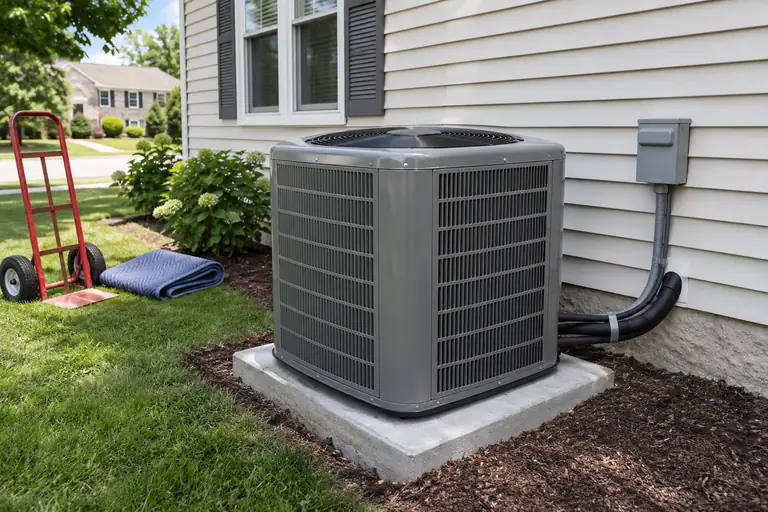
The short answer
Before a condo or HOA HVAC replacement, identify the ownership arrangement, read the declaration and determine which parts of the proposed work affect the unit, common elements or controlled facilities. Confirm applicable permissions and access arrangements in writing. Pennsylvania's condominium and planned-community provisions differ, so the building style alone does not establish responsibility.
Your planning checklist
- Identify the ownership arrangement and governing documents before assigning HVAC responsibility.
- Separate equipment serving one unit from common elements and controlled facilities.
- Check the approval process for the actual exterior or common-element change.
- Coordinate written scope, property access and any municipal review before scheduling work.
A quick plan before you call.
A homeowner checklist for identifying equipment, checking authorization, comparing proposals and preparing safely.
Listen to the audio or read the transcript
Planning heating or cooling work in the Harrisburg area? Start with your actual home, rather than choosing equipment from a town name or floor area alone.
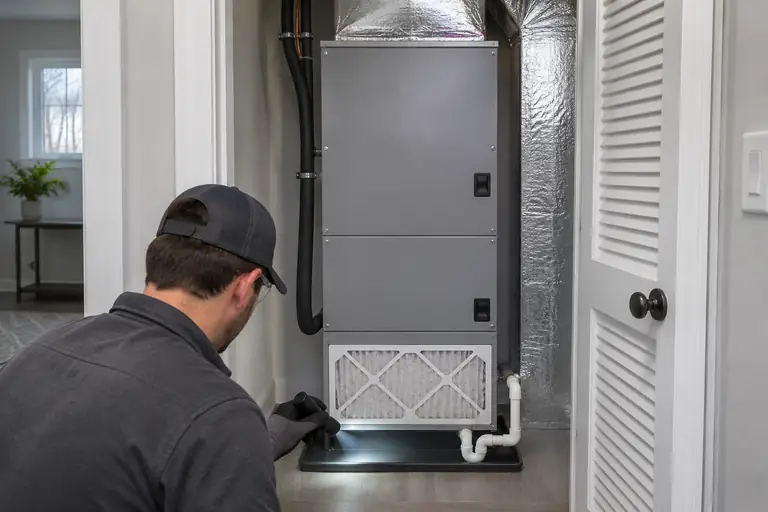
First, identify what you have: a furnace, a boiler with radiators, or a ducted heat pump. Note the rooms affected and any additions or layout changes. Photograph accessible labels without opening equipment.
Second, identify the property municipality and the proposed work. A mailing city or ZIP code does not identify every municipal boundary. For a condo or planned community, check the governing documents and who can authorize changes.
Third, compare the complete scope. Include equipment matching, ducts or piping, electrical work, venting, controls, removal, and the route used to reach the equipment. Explain known drainage or water-exposure concerns.
Keep safety first. Leave wiring, fuel and refrigerant components to a qualified professional. Do not restart equipment that has contacted floodwater. Local climate data can help plan seasonal upkeep, but it cannot size a system for a particular house.
For a property-specific conversation, call Harrisburg Heating and Cooling at seven one seven, two nine four, zero three three eight. Ask for a free quote covering the proposed work. Read the complete guides for sources and the detailed planning checklist.
General homeowner guidance with computer-generated narration. Your actual equipment and property determine the work. See the complete guides and sources for detail.
Identify the property arrangement before assigning the work
A townhome describes a building form; it does not by itself identify who owns each part of the HVAC system. Gather the declaration, relevant maintenance provisions, unit-boundary information and association instructions. If you rent, involve the person authorized to approve the work. An occupant's report of poor comfort is useful, while permission to alter the property is a separate matter.
Pennsylvania's condominium upkeep provision, section 3307, generally separates association responsibility for common elements from owner responsibility for units, with declaration and insurance exceptions. The planned-community counterpart is section 5307. Use the applicable documents and provisions to investigate the actual system rather than assuming the visible location of equipment settles who maintains or replaces it.
Build a responsibility worksheet for the whole system
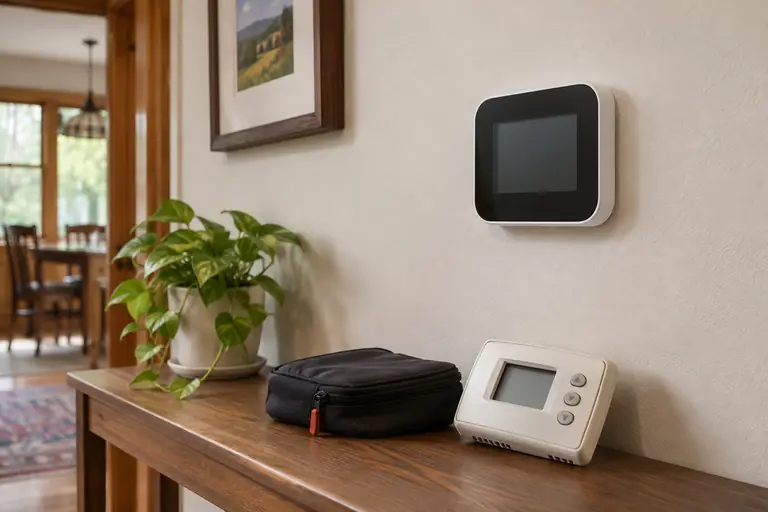
List the indoor appliance, outdoor unit, thermostat, refrigerant piping, condensate route, ducts and any roof or wall openings. Beside each item, record which unit or spaces it serves, where it sits and which document explains responsibility. A question mark is more useful than guessing. Ask the association to clarify unresolved items before a proposal assigns work to the wrong party.
Consider access as well as ownership. Equipment may serve one home while being reached through a shared area, or a planned installation may affect a surface the owner cannot alter independently. Record who provides keys, entry permission and any necessary access coordination. Do not infer approval to cross a roof, neighboring patio or another unit from the fact that equipment is nearby.
Check the actual change against the applicable approval process
For condominiums, section 3213 addresses alterations and association permission for changes to exterior or common-element appearance. The planned-community alteration provision, section 5213, distinguishes common elements and controlled facilities from other portions of units. Both operate subject to the declaration and other law. That difference is a reason to identify the arrangement before repeating a general rule about all HOA exterior work.
Ask whether the proposal changes location, visible appearance, screening, wall openings or shared components. A repair in place and a new outdoor position can present different questions. Have the association identify the submission process and written decision needed for your project. If responsibility or interpretation remains unresolved, resolve that with the association and an appropriate property adviser before treating an equipment estimate as authorization.
Prepare a concise equipment and location packet
A useful packet begins with the existing and proposed equipment models, dimensions and location photos. Add a simple marked plan showing any new position, line route, opening or screening. Include the information the association actually requests, such as published equipment sound data or a description of work affecting shared surfaces. Ask for the current requirements rather than inventing a community-wide standard.
Keep the proposed installation understandable to someone who has not visited the unit. Identify which components remain, what is removed and what changes. State how the contractor will reach the equipment and which restoration work is included. The packet should describe a real proposal for review; it should not assume the association has already approved a particular product or contractor.
Keep association decisions and municipal review separate
An association's decision addresses its own property requirements. Questions about building, electrical, zoning or other municipal review belong with the authority responsible for the parcel and work. Provide the actual municipality alongside the postal address. A Harrisburg-area mailing label does not identify every local office that may be relevant to the project.
In the estimate, record who coordinates each required step and when equipment selection can be finalized. Include building access, shared work areas and any agreed delivery arrangements. If a proposed model changes after review, ask whether that changes the submission. This makes the project easier to coordinate while avoiding promises about an association's response time or approval outcome.
Request a quote that follows the agreed responsibility
The quote should identify the equipment, removal, connected work, controls and restoration included for the party requesting it. If some work belongs to the association or another trade, make that boundary explicit. Compare proposals for the same authorized project so a lower equipment figure is not mistaken for a complete installation with different responsibilities.
Call Harrisburg Heating and Cooling at (717) 294-0338 for a free quote. Share the address, equipment type, operating problem and any available association instructions. Mention an urgent failure separately from a planned upgrade so the immediate equipment concern and the longer replacement process can be discussed in the right order. This guide does not claim an association endorsement or approved-contractor relationship.
Questions about this topic
Does an outdoor unit automatically belong to the condo association?
Its outdoor location does not settle responsibility. Review the declaration, unit boundaries, applicable maintenance provisions and the equipment's actual arrangement. Ask for clarification on the unit, supporting surface and connected components rather than treating them as one automatically assigned item.
What initial AC replacement cost range is available?
Carrier gives a general U.S. central AC replacement reference from $3,000 to $15,000 with standard installation. It is not a condo-specific quote or association allowance. Call (717) 294-0338 for a free quote covering the agreed equipment and connected work.
Can association approval replace a municipal permit?
They address different requirements. Ask the property's municipality about the proposed work and follow the association's applicable process separately. Neither a contractor's estimate nor an association discussion establishes that every other required review has been completed.
Sources and further reading
- Pennsylvania condominium upkeep: 68 Pa.C.S. section 3307
- Pennsylvania condominium alterations: section 3213
- Pennsylvania planned-community upkeep: section 5307
- Pennsylvania planned-community alterations: section 5213
- Carrier general U.S. replacement cost references
- Census explanation of postal ZIP Codes and ZCTAs