Ducted heat pump installation needs a plan for both summer cooling and winter heating. That includes the house load, existing ducts, electrical service, backup heat and thermostat controls. Harrisburg Heating and Cooling helps homeowners discuss replacement or conversion projects in Harrisburg with those questions in view. A useful proposal explains how the selected equipment will work through changing outdoor conditions, not just its headline efficiency rating.
A replacement is an opportunity to review the equipment combination and the home as it stands now. Ask whether the existing indoor section, line set and controls are suitable. A new outdoor unit should not be selected without considering what it connects to.
You want to change the primary heating source
A conversion needs more planning than replacing one box. Discuss the existing fuel equipment, heat distribution, electrical capacity and intended backup. The quote should explain what remains, what is removed and any work needed before the new system can operate.
Ducts were designed around a different system
Ducts that served an older furnace may need review for the proposed heat pump airflow. Share existing comfort complaints. Ask whether supply and return capacity can support the design rather than assuming the ducts are suitable because they are already in place.
Backup heating is costly or confusing to operate
Explain how the present system behaves and what you want to improve. Equipment selection, heat loss and control settings all matter. Request a plain-language explanation of when backup heat is expected and which choices affect its operation.
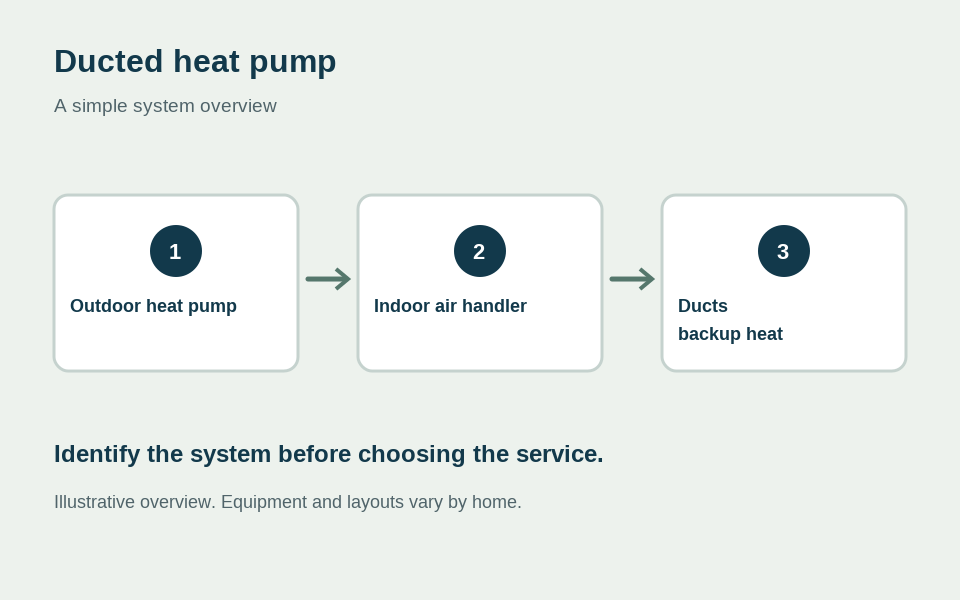
The system behind the symptom
See how the parts connect.
A comfort problem can involve more than the component you first notice. Identifying the equipment and describing what happens helps focus the service conversation.
Use the model label and owner manual for your actual system. Layouts, controls and service requirements vary.
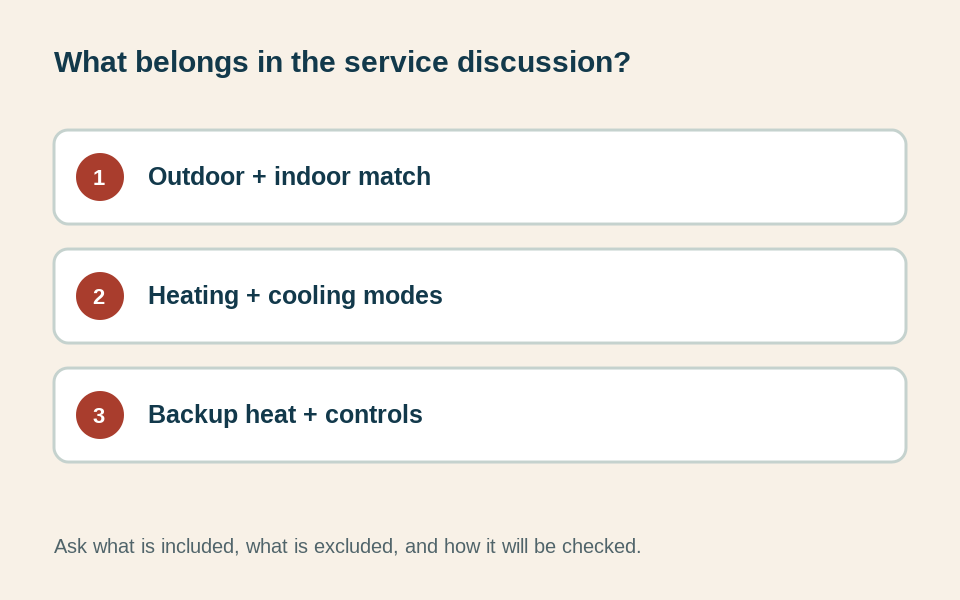
Understand the work
What should the service cover?
These are useful points to discuss. The right scope follows the actual equipment, condition and findings at your home.
01
Heating and cooling requirements
Ask for the sizing basis for both seasons and how the house characteristics were considered. Heating capacity changes with outdoor conditions, so the design should address more than the cooling requirement. Include planned insulation work and changes to occupied rooms in the discussion.
02
Equipment match and backup strategy
The outdoor unit, indoor section and thermostat need a compatible design. Ask how backup heat is selected and controlled, and confirm eligibility for any proposed fuel-burning equipment. A clear operating strategy helps you compare systems that may look similar on an equipment list.
03
Duct, electrical and placement work
Review existing airflow capacity, return paths, available electrical supply and outdoor location. The proposal should explain any duct transitions, circuit work, drainage or line-set changes. Ask who is responsible for related trade work and required local permits.
04
Startup and owner handover
Ask which operating modes, controls and backup stages will be checked and how any weather limitations are recorded. The handover should cover thermostat use, filter access and care requirements. Retain the equipment match, startup information and written warranty terms.
Before approving work
What affects the quote?
Replacement or conversion
A compatible existing ducted heat pump replacement can have a different scope from a heating-fuel conversion. Electrical, duct and backup-equipment changes may be substantial. Ask for those items to be identified explicitly so the total describes a usable installed system.
Capacity and operating features
Winter performance, variable operation, indoor equipment and control choices influence the proposal. Request an explanation of what each choice changes for your home. Avoid comparing systems on a single efficiency number when their backup strategy and included work differ.
Site requirements and ownership terms
Outdoor placement, line routing, equipment access and permits affect labor. Compare manufacturer and labor warranties separately and ask about maintenance expectations. Rebate, tax and utility program eligibility changes over time and must be checked before assuming any incentive will apply.
Make the call useful
What to have ready.
Gather accessible information. Leave panels, wiring, fuel controls and refrigerant components to a qualified professional.
Gather the existing heating and cooling model numbers, fuel information and recent service history.
Describe winter and summer room comfort, thermostat habits and any unusual backup-heat use.
Share renovation or insulation plans and identify electrical-panel access for a professional review.
List priorities such as noise, upfront budget, controls and the desired role of existing heating equipment.
Helpful answers
Heat pump installation questions
Practical guidance for Harrisburg homeowners considering this service.
Can a heat pump use my existing ducts?+
Possibly, but their condition and airflow capacity need review. A ducted heat pump is a whole-system installation, and restricted returns or damaged branches can limit comfort. Ask whether the proposal includes duct assessment, necessary corrections and an explanation of any room problems that will remain.
Will I still need backup heat?+
That depends on the home load, chosen equipment, winter design and control strategy. Ask the provider to explain the planned source and expected role of backup heat. Do not assume that every heat pump requires the same backup arrangement or that a brochure describes your house.
Can a furnace stay as part of the new system?+
A compatible combined design may be possible, but equipment, controls, airflow and fuel-service eligibility must be checked. Ask exactly which furnace and heat pump combination is proposed and how changeover will work. Keeping equipment is a design decision, not simply leaving it connected.
What should a heat pump installation quote explain?+
It should identify the indoor and outdoor equipment, sizing basis, duct assumptions, electrical and line-set work, thermostat, backup strategy, permits and startup checks. Ask for exclusions and written warranty terms. Compare incentives separately from the underlying installation cost and confirm eligibility using current official program information.
Request help for a ducted heat pump that loses heating or cooling, struggles with ice or uses backup heat unexpectedly. Record the mode, thermostat message and rooms affected before discussing service.
Review seasonal care for a ducted heat pump, including airflow, outdoor conditions, controls and backup heat. Document changes in operation before they get lost between heating and cooling seasons.
Weak airflow in one room may involve a damaged branch, a return-air problem or a wider system restriction. Discuss duct repair, sealing and airflow findings before assuming cleaning or equipment replacement is the answer.
References explain general equipment principles; they do not establish the condition of your system.
Harrisburg Heating and Cooling
Talk through the next step.
Tell us what your system is doing, which rooms are affected, and where you’re located. We’ll discuss the appropriate next step and current availability.