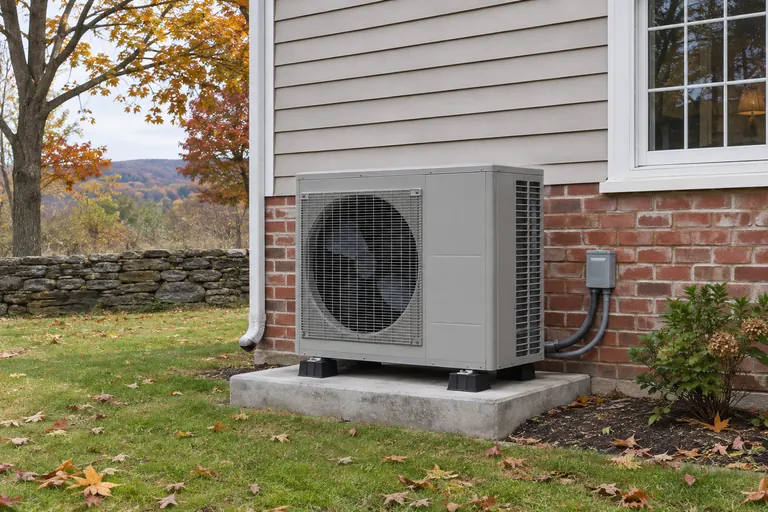
A ducted heat pump uses connected indoor and outdoor equipment to heat and cool the home through supply and return ducts. When that system stops keeping rooms comfortable, the symptom may involve airflow, controls, refrigeration or backup heat. Contact Harrisburg Heating and Cooling with the operating mode and equipment details so a heating complaint is clearly distinguished from a cooling failure.
Describe the indoor temperature trend, outdoor conditions and any auxiliary-heat message. Air from a heat pump can feel different from furnace air, so comfort and operating behavior matter more than judging a vent with your hand alone.
Ice persists on the outdoor equipment
Some winter frost and defrost activity can be normal, but heavy or persistent ice needs attention. Take a photograph from a safe distance. Do not chip ice, pour hot water into the unit or reach through the fan guard.
Backup heat behaves differently than before
An auxiliary-heat indicator does not by itself prove a failure. Note whether it appears during colder weather, after a setpoint change or continuously in mild conditions. Give the provider that context rather than changing installer settings to suppress the message.
Heating works but cooling does not
A failure in only one mode is important information. Explain whether the outdoor unit and indoor blower respond, and whether the issue started after thermostat work or seasonal changeover. Do not assume the unit needs replacement because one mode has stopped working.
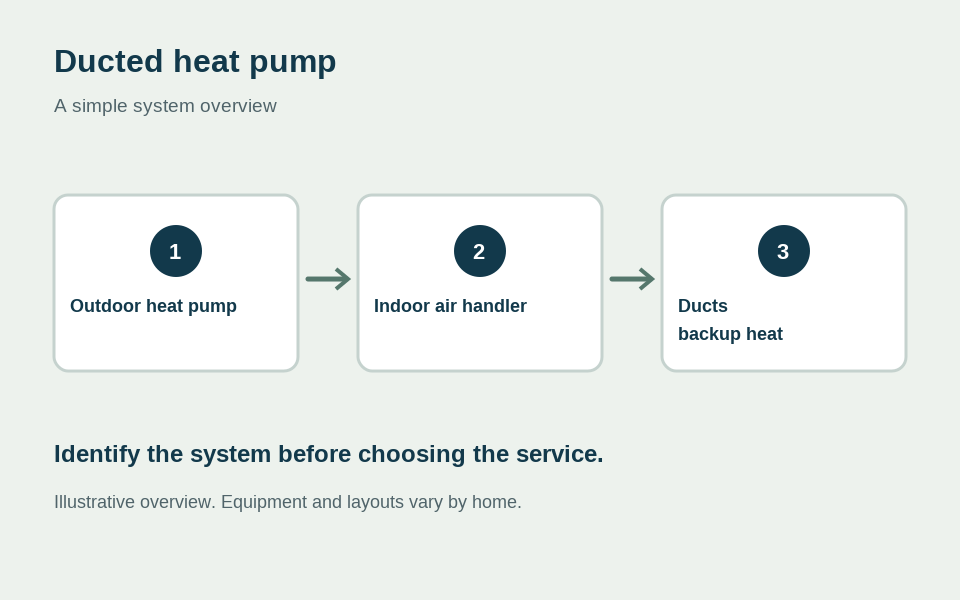
The system behind the symptom
See how the parts connect.
A comfort problem can involve more than the component you first notice. Identifying the equipment and describing what happens helps focus the service conversation.
Use the model label and owner manual for your actual system. Layouts, controls and service requirements vary.
Understand the work
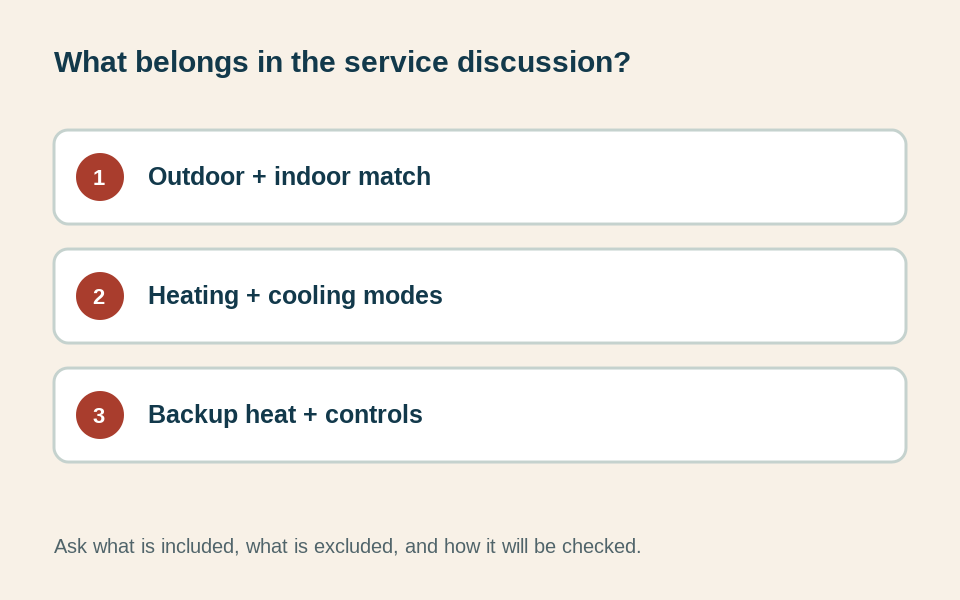
What should the service cover?
These are useful points to discuss. The right scope follows the actual equipment, condition and findings at your home.
01
Confirm the equipment combination
Identify the outdoor heat pump, indoor air handler or furnace and thermostat. Mention the backup heat type if known. A ducted heat pump with electric backup and a system paired with a fuel-burning furnace have different control and service requirements.
02
Check the complaint in context
A useful assessment considers the selected mode, thermostat request, observed sequence and weather conditions. Ask which findings distinguish expected behavior from a fault. Intermittent defrost or backup-heat complaints may need your observations when conditions differ from the visit.
03
Separate airflow, controls and equipment faults
A dirty or incorrect filter, restricted air path, thermostat configuration or equipment defect can affect comfort. Professional electrical and refrigerant checks should follow the evidence. Ask what supports the proposed repair and whether any duct correction requires its own scope.
04
Explain the repair and follow-up
Review the part, labor and checks planned after repair. If only one operating mode can be tested under current conditions, ask how that limitation will be documented. Keep any thermostat instructions and advice about monitoring the system with the service record.
Before approving work
What affects the quote?
Diagnostic complexity
Control staging, backup heat and weather-dependent behavior can require different checks from a simple no-start fault. Confirm what the assessment includes and how a return visit is handled if the symptom cannot be reproduced during the first appointment.
Model and component availability
A control board, motor or refrigerant repair must suit the equipment combination. Provide the model numbers before relying on parts availability. Ask whether connected components or manufacturer-specific controls affect the proposed repair and the likely sequence of work.
Immediate repair versus a wider issue
Repairing a component may not correct inadequate ducts, poor backup-heat setup or an older installation mismatch. Ask the written proposal to identify the fault being fixed and any separate recommendations. Consider replacement using complete proposals rather than comparing a part price with an equipment-only quote.
Make the call useful
What to have ready.
Gather accessible information. Leave panels, wiring, fuel controls and refrigerant components to a qualified professional.
Record whether the problem happens in heating, cooling or both, and photograph the thermostat display.
Gather outdoor and indoor model numbers along with information about backup heat if available.
Describe persistent icing, water, unusual noise and recent changes to schedules, setpoints or controls.
Clear safe access and mention a recent power interruption, electrical change or filter replacement.
Helpful answers
Heat pump repair questions
Practical guidance for Harrisburg homeowners considering this service.
Does auxiliary heat mean my heat pump is broken?+
No. Backup heat may operate under normal conditions depending on temperature, system design and control settings. A new pattern, continuous use in mild weather or falling indoor temperature is worth reporting. Do not disable backup heat or alter installer settings without system-specific advice.
Is steam from the outdoor heat pump a problem?+
Water vapor can appear during winter defrost, but appearance alone cannot confirm normal operation. Note how long it lasts and whether normal heating returns. Smoke, a burning smell or an electrical concern needs a different response; keep away and seek appropriate emergency help if necessary.
Should I switch to emergency heat?+
Emergency heat behavior depends on the installed backup system and thermostat. Follow your equipment instructions and ask the service provider for advice for your exact setup. It is not the same as a routine efficiency setting, and changing it does not diagnose the outdoor unit.
Can a heat pump repair involve the ductwork?+
Yes. If air is restricted or lost before reaching the rooms, the equipment may operate without delivering useful comfort. Describe which rooms are affected and whether the problem changes with closed doors. Ask whether the visit includes airflow checks or whether a duct assessment is a separate service.
Review seasonal care for a ducted heat pump, including airflow, outdoor conditions, controls and backup heat. Document changes in operation before they get lost between heating and cooling seasons.
Explore a ducted heat pump with attention to winter capacity, backup heat, electrical needs and existing ducts. Compare the whole system and its control strategy before selecting equipment.
Check smart-thermostat compatibility, power requirements and heating or cooling stages before replacement. Proper controls depend on your equipment and wiring, not simply the number of wires at the wall.
References explain general equipment principles; they do not establish the condition of your system.
Harrisburg Heating and Cooling
Talk through the next step.
Tell us what your system is doing, which rooms are affected, and where you’re located. We’ll discuss the appropriate next step and current availability.