Ducted heat pumps can serve the home during both heating and cooling seasons, so useful maintenance considers more than a summer AC check. Discuss the indoor equipment, outdoor unit, thermostat and backup heat with Harrisburg Heating and Cooling. If the system already struggles to heat, cool or defrost, describe that fault when requesting service so preventive maintenance is not mistaken for a repair assessment.
A heating and cooling system sees different operating demands in each season. Ask how the maintenance schedule suits your equipment and usage. The owner manual and service history are better guides than assuming that one generic visit covers every possible condition.
Outdoor clearance or drainage has changed
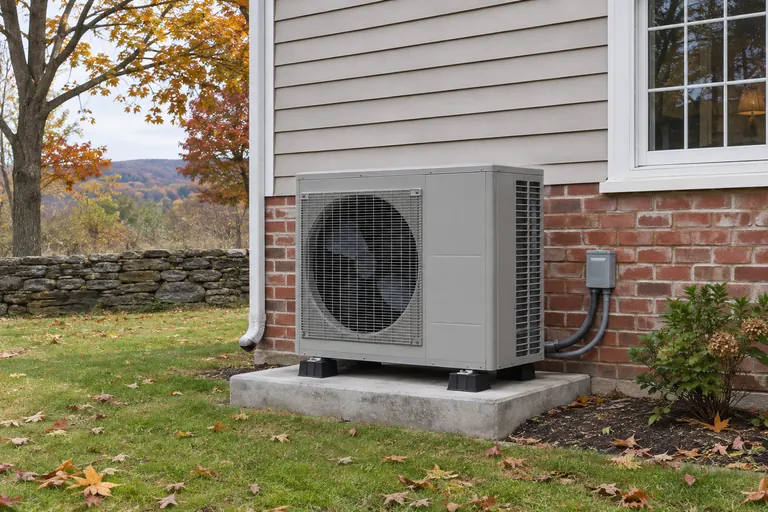
Vegetation, stored items, runoff or settling around the unit can affect access and operating conditions. Describe what has changed without reaching into the cabinet. A maintenance discussion can identify whether site corrections need separate attention.
Auxiliary-heat use seems different
Keep notes about weather, thermostat changes and the duration of the message. Unexpected behavior may be a control or repair concern rather than a routine care task. Mention it at booking so the provider can explain the appropriate assessment.
One season performs worse than the other
A heat pump that cools well but struggles with heating, or the reverse, deserves a clear seasonal history. Record when the difference began and any fault messages. Ask which modes can be checked during the planned visit and which require different conditions.
The system behind the symptom
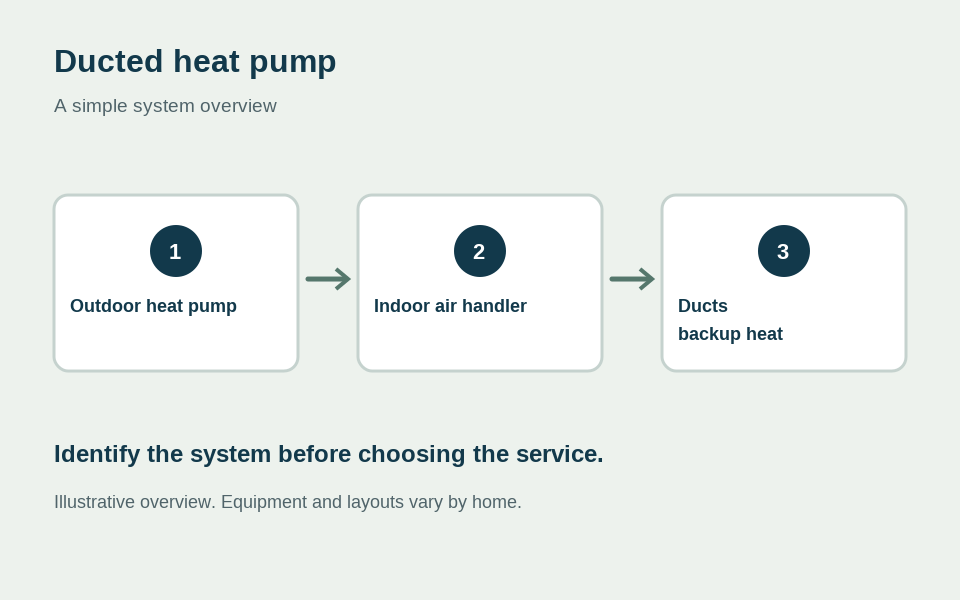
See how the parts connect.
A comfort problem can involve more than the component you first notice. Identifying the equipment and describing what happens helps focus the service conversation.
Use the model label and owner manual for your actual system. Layouts, controls and service requirements vary.
Understand the work
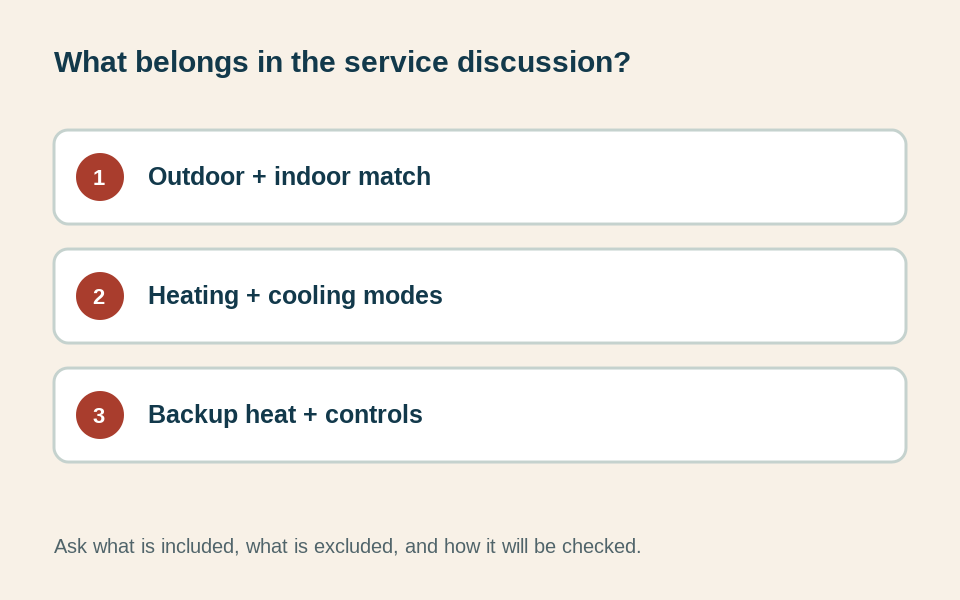
What should the service cover?
These are useful points to discuss. The right scope follows the actual equipment, condition and findings at your home.
01
Indoor airflow and filter care
Review filter fit, accessible air paths and blower condition. Mention rooms with weak supply or noisy returns. Routine service can identify visible concerns, while persistent room imbalance may need measured duct investigation. Confirm what airflow evaluation is included in the visit.
02
Outdoor equipment condition
Ask for the accessible outdoor coil, cabinet condition and operating concerns to be considered according to the model instructions. Cleaning requirements vary with buildup and access. Significant fouling, physical damage or a persistent ice complaint may need separately scoped work.
03
Controls and operating modes
The thermostat, reversing operation, backup heat and defrost controls affect seasonal behavior. Ask which checks are suitable on the visit and how limitations will be recorded. Installer configuration should be reviewed against the equipment combination rather than changed to a generic setting.
04
Records and recommendations
Keep completed service tasks, recorded observations and any repair recommendations together. Ask what needs prompt correction and what can be monitored. A clear record makes future heating or cooling complaints easier to compare with the system condition during maintenance.
Before approving work
What affects the quote?
Seasonal checks included
Ask whether the service covers the outdoor heat pump, indoor air-moving section, controls and backup arrangement. Some operating checks depend on weather. Compare the planned work and reporting, not just the number of visits printed in a service offer.
Cleaning and existing faults
Ordinary preventive care differs from deep cleaning, leak diagnosis or correction of a failed control. Explain known problems in advance. Request approval before added work and ask whether a repair concern changes the purpose or price of the appointment.
Maintenance agreement details
For a service plan, confirm the equipment combination, visit timing, repair exclusions and renewal terms. Do not assume backup equipment, replacement parts or urgent attendance are included. Ask how missed seasonal testing or a weather-limited visit will be handled.
Make the call useful
What to have ready.
Gather accessible information. Leave panels, wiring, fuel controls and refrigerant components to a qualified professional.
Provide indoor and outdoor model details and identify the backup heat source if it is known.
Bring notes about summer cooling, winter heating, persistent frost and auxiliary-heat messages.
Locate the filter information and tell the provider about recent thermostat or electrical changes.
Clear safe equipment access and describe runoff, vegetation or storage affecting the outdoor unit.
Helpful answers
Heat pump maintenance questions
Practical guidance for Harrisburg homeowners considering this service.
Is heat pump maintenance the same as AC maintenance?+
There is overlap in cooling, airflow and drainage care, but the heat pump also has heating operation and a backup-control arrangement to consider. Ask for a checklist suited to the actual system. A cooling-only visit does not establish that every heating function was tested.
Should I remove winter ice myself?+
Do not chip ice or pour hot water over the equipment. Record what you see and contact the service provider if ice is heavy, persistent or accompanied by poor heating. Some frost can occur during normal operation, but a photograph and timing help describe the concern.
Can a dirty filter affect both heating and cooling?+
Yes, because both modes depend on the indoor air-moving system. Use the correct filter and follow the manufacturer care instructions. If airflow remains weak after ordinary owner care, report the symptom rather than fitting a more restrictive filter or repeatedly changing control settings.
Will maintenance lower my electricity bill?+
Maintenance can address conditions affecting operation, but no specific bill reduction can be promised. Weather, setpoints, the building and backup-heat use all influence consumption. Compare usage with those factors in mind and ask what actual findings, rather than a generic savings claim, support a recommendation.
Request help for a ducted heat pump that loses heating or cooling, struggles with ice or uses backup heat unexpectedly. Record the mode, thermostat message and rooms affected before discussing service.
Check smart-thermostat compatibility, power requirements and heating or cooling stages before replacement. Proper controls depend on your equipment and wiring, not simply the number of wires at the wall.
Compare media filtration with your HVAC system, filter space and maintenance needs in view. Understand what particle filters can do, which concerns need another approach and why airflow compatibility matters.
References explain general equipment principles; they do not establish the condition of your system.
Harrisburg Heating and Cooling
Talk through the next step.
Tell us what your system is doing, which rooms are affected, and where you’re located. We’ll discuss the appropriate next step and current availability.