AC repair starts with what the system is doing, not with a guess about which part to replace. If your central air conditioner runs without cooling, leaves water near the indoor equipment, or stops before the house is comfortable, describe the change to Harrisburg Heating and Cooling. We help you identify the right residential service request and discuss the equipment, access and symptoms before arranging the next step.
Air movement alone does not tell you whether the cooling cycle is working. Note whether the outdoor unit starts, whether every room is affected, and whether the problem developed suddenly or over several hot afternoons.
Ice appears on a line or coil cabinet
Stop cooling and arrange an inspection rather than trying to chip away ice or repeatedly restarting. Airflow and refrigerant issues can produce similar symptoms, and thawing does not establish that the underlying problem is fixed.
Water collects near the air handler
A drain, pump, pan or ice-related issue may need attention. If water reaches electrical equipment, keep away from it. Describe the location of the water and whether it appears only while the AC is running.
The system starts and stops repeatedly
Record whether the thermostat display changes, whether the outdoor equipment stops with the indoor blower, and roughly how long a cycle lasts. Short cycles need investigation; lowering the setpoint further will not explain the cause.
The system behind the symptom
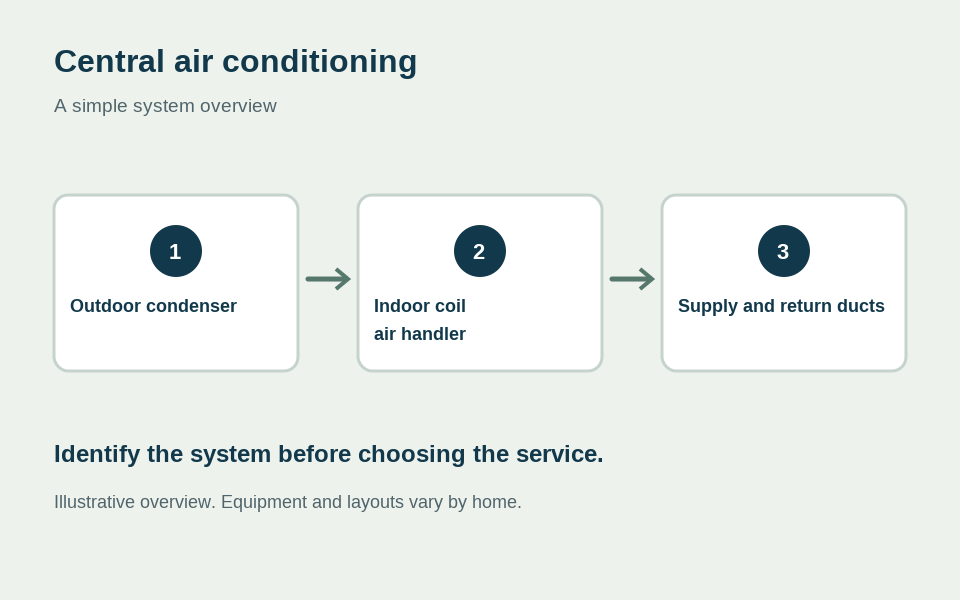
See how the parts connect.
A comfort problem can involve more than the component you first notice. Identifying the equipment and describing what happens helps focus the service conversation.
Use the model label and owner manual for your actual system. Layouts, controls and service requirements vary.
Understand the work
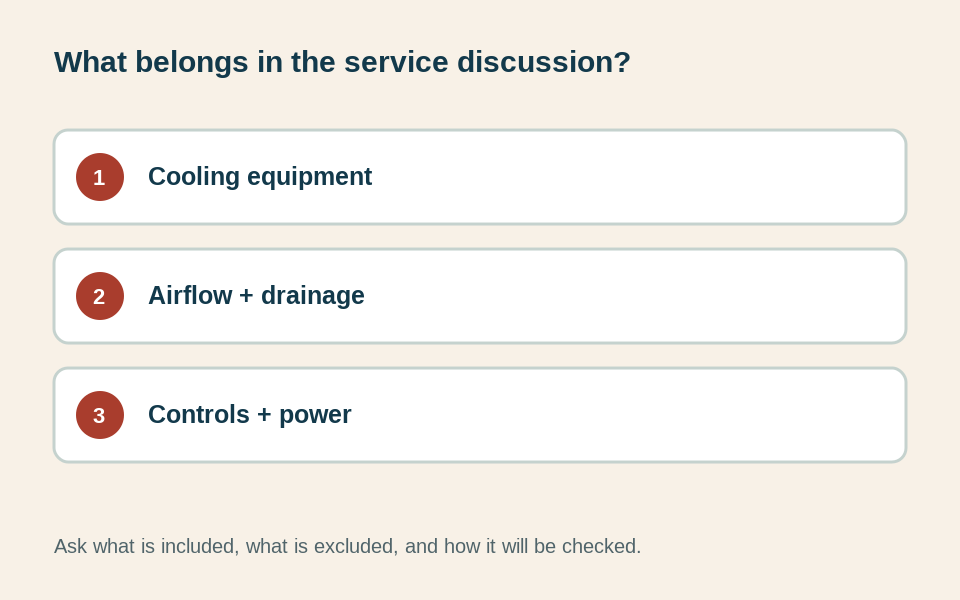
What should the service cover?
These are useful points to discuss. The right scope follows the actual equipment, condition and findings at your home.
01
Symptoms and operating sequence
A useful repair assessment follows the cooling request from thermostat to indoor and outdoor equipment. Ask which observations support the diagnosis and whether the problem can be reproduced, especially if the system happens to work again before the visit.
02
Airflow and drainage review
Filter condition, accessible air paths, blower operation and condensate handling can affect cooling. The appropriate checks depend on the complaint. A blocked drain and an undersized return are different jobs, even when both first appear as an AC problem.
03
Component and refrigerant decisions
Electrical testing and refrigerant work belong with a qualified professional. Ask whether the proposed work addresses a failed component, a leak, an airflow restriction or another condition. A refrigerant addition should come with an explanation of why it is needed.
04
Repair options and verification
Review the proposed part, labor, access needs and any remaining uncertainty before approving work. Ask how operation will be checked afterward and what to watch for. If an intermittent problem cannot be reproduced, request a clear explanation of the next diagnostic step.
Before approving work
What affects the quote?
Finding the fault versus fixing it
Confirm what the assessment charge covers and whether repair labor is separate. Intermittent electrical faults can require more investigation than a visibly damaged part. Ask what happens if a second visit or additional testing is needed.
Part availability and system condition
The model, part required and condition of connected equipment affect the repair proposal. A replacement control or motor must suit the system. Supply the serial number so availability can be checked instead of assuming every part is immediately on hand.
Access and related work
An accessible basement air handler presents different work than equipment behind a finished enclosure. Drain modifications, damaged wiring or duct corrections may change scope. Ask the written estimate to distinguish the immediate repair from optional improvements.
Make the call useful
What to have ready.
Gather accessible information. Leave panels, wiring, fuel controls and refrigerant components to a qualified professional.
Record when the problem began, the thermostat setting and whether cooling ever returns on its own.
Photograph the accessible equipment labels and visible water or ice without opening a cabinet.
Provide the filter size, last change date and any recent electrical, thermostat or renovation work.
Clear a walking route to both units and mention gates, pets, tight stairs or tenant access arrangements.
Helpful answers
AC repair questions
Practical guidance for Harrisburg homeowners considering this service.
Should I keep running an AC that is frozen?+
Turn cooling off and arrange service. Do not chip ice, use a heat gun or open the refrigerant circuit. Tell the provider what froze and whether airflow weakened first. A unit can thaw and run again while the fault that caused icing remains unresolved.
Does warm air mean the AC needs refrigerant?+
It is one possibility, but thermostat settings, electrical faults, airflow restrictions and other problems can also leave the house warm. Refrigerant is not a routine consumable. Ask for the findings behind any recharge recommendation and whether leak investigation or a separate repair is appropriate.
What can I check before requesting service?+
Check the thermostat mode and setpoint, look at an accessible filter and make sure supply and return grilles are unobstructed. Follow your owner manual. Avoid repeated breaker resets, exposed wiring or reaching into the outdoor unit. Stop if you notice burning, water at electrical parts or another hazard.
How do I compare repair with replacement?+
Compare the actual repair scope with an installation proposal that includes the indoor and outdoor match, duct condition and startup work. Age alone is not a diagnosis. Consider recurring faults, parts availability, comfort concerns and how long you expect to keep the home.
Give a working central AC system a seasonal review of airflow, drainage, controls and equipment condition. Identify an existing cooling problem when booking so it receives the right assessment.
Compare central AC replacement and first-time installation with attention to sizing, existing ducts and indoor equipment. Know what the proposal includes before choosing a system.
Weak airflow in one room may involve a damaged branch, a return-air problem or a wider system restriction. Discuss duct repair, sealing and airflow findings before assuming cleaning or equipment replacement is the answer.
References explain general equipment principles; they do not establish the condition of your system.
Harrisburg Heating and Cooling
Talk through the next step.
Tell us what your system is doing, which rooms are affected, and where you’re located. We’ll discuss the appropriate next step and current availability.