Air conditioning installation is a decision about the whole cooling system: equipment, airflow, controls, drainage and the rooms you want comfortable. Harrisburg Heating and Cooling helps homeowners discuss central AC installation and replacement without choosing equipment from floor area alone. Explain whether you are replacing an existing system or adding central cooling, and bring the comfort problems you want the project to solve.
If an expensive or repeated fault has prompted a replacement quote, compare both paths with the same facts. Ask which components can remain, what makes replacement worthwhile in your situation, and which existing comfort problems a new unit might leave unchanged.
Some rooms never cool evenly
An installation proposal should account for the rooms that struggle now. A larger outdoor unit does not automatically correct a restricted return or a long, damaged branch duct. Explain which rooms differ and whether doors are normally open or closed.
The home has changed since installation
New windows, insulation, an addition or a finished attic can change cooling requirements. Make those changes part of the assessment. The capacity printed on the old equipment is useful history, but it is not a substitute for reviewing the home as it is today.
You are adding central cooling
First-time central AC needs a practical route for distributing air as well as a place for the equipment. Discuss existing ducts, ceiling or wall access, electrical capacity and condensate disposal before treating an equipment-only price as a complete project.
The system behind the symptom
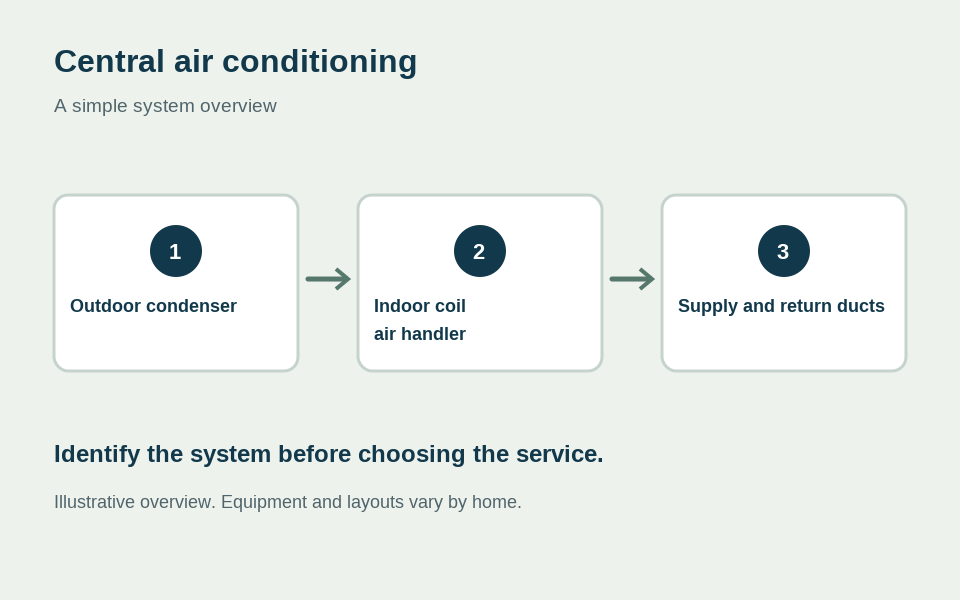
See how the parts connect.
A comfort problem can involve more than the component you first notice. Identifying the equipment and describing what happens helps focus the service conversation.
Use the model label and owner manual for your actual system. Layouts, controls and service requirements vary.
Understand the work
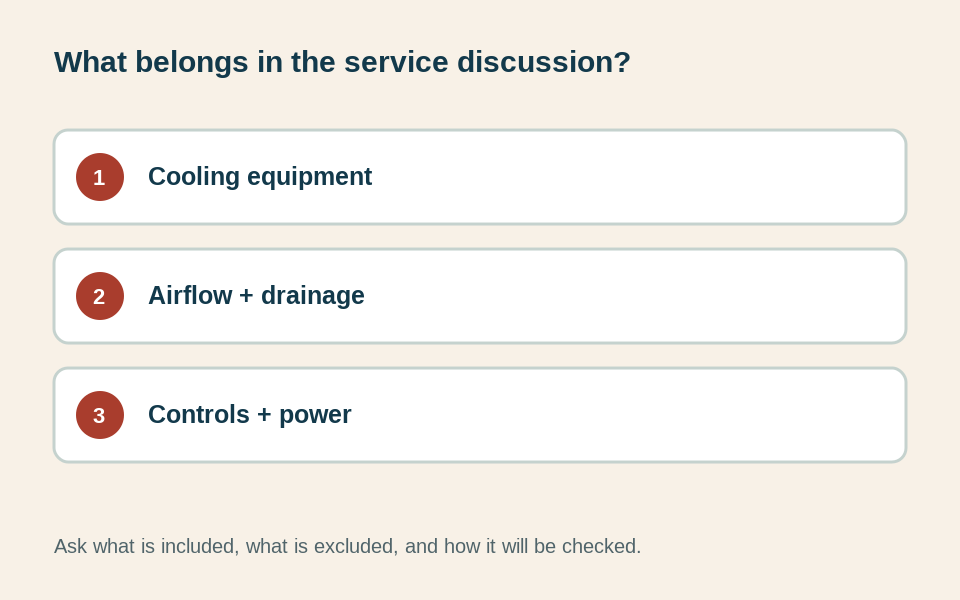
What should the service cover?
These are useful points to discuss. The right scope follows the actual equipment, condition and findings at your home.
01
Home and cooling-load review
Ask how the proposed capacity was selected. Windows, insulation, layout, orientation and room use matter. Share summer comfort concerns and any planned building work so the design addresses the expected home, rather than simply repeating an older equipment size.
02
Indoor and outdoor compatibility
The outdoor condenser, indoor coil, air-moving equipment and controls must work together. Request model details and clarification about what will be reused. Replacing an outdoor box alone can leave important compatibility, airflow or efficiency questions unanswered.
03
Installation details
A complete proposal explains the equipment location, line set, electrical work, drain route and necessary duct transitions. Ask about access openings, equipment removal, required local permits and the division of responsibility for any repairs to finished surfaces.
04
Startup and handover
Before accepting the installation, ask for an explanation of the operating checks, thermostat use, filter location and maintenance requirements. Keep model and serial numbers, the written scope and warranty documents together. Confirm who handles any applicable manufacturer registration.
Before approving work
What affects the quote?
Replacement versus a new distribution system
Using suitable existing ducts and connections can differ substantially from adding central cooling where none existed. Ask which parts are included and which require a separate trade or quote. A complete scope is more useful than comparing equipment prices in isolation.
Equipment and control choices
Capacity, operating stages, indoor equipment match and thermostat requirements affect the proposal. Ask what each upgrade changes for your home. Published equipment ratings do not tell you how well an installation will perform with restricted airflow or poorly matched components.
Site work and exclusions
Electrical changes, difficult equipment removal, a new drain route or duct corrections can affect labor. Have permit responsibilities, disposal and finish repairs stated plainly. Compare written proposals using the same included work and warranty terms rather than the total alone.
Make the call useful
What to have ready.
Gather accessible information. Leave panels, wiring, fuel controls and refrigerant components to a qualified professional.
List uncomfortable rooms, summer humidity concerns and changes made to insulation, windows or living space.
Gather the existing indoor and outdoor model numbers and any recent repair or maintenance records.
Identify access restrictions, outdoor placement concerns and areas where you want to protect landscaping or finishes.
Write down your priorities for initial cost, sound, controls, maintenance access and long-term ownership.
Helpful answers
AC installation questions
Practical guidance for Harrisburg homeowners considering this service.
Should the new air conditioner be the same size as the old one?+
Not automatically. The old capacity may have been unsuitable, and the home may have changed. Ask for a sizing explanation based on the building and its cooling needs. Tell the provider about rooms that overheat, additions and insulation improvements before equipment is selected.
Can existing ductwork stay?+
It may be reusable if its condition, layout and airflow capacity suit the proposed system. An inspection can identify repairs or transitions that should be part of the installation. Ask whether the quote assumes the ducts are adequate or includes checking and correcting them.
Will replacement fix upstairs cooling?+
It depends on the cause. Heat gain, return-air paths, duct condition, insulation and system controls can affect upstairs comfort. Describe the problem during the assessment and ask which proposed work addresses it. A new outdoor unit by itself is not a room-by-room comfort plan.
What should I receive with the installation quote?+
Request equipment model information, included removal and installation work, duct and electrical assumptions, permit responsibility, startup checks and written warranty terms. Ask about exclusions and potential change orders. Financing, rebates and manufacturer promotions should be verified separately rather than assumed to apply.
Warm air, ice, water around the indoor unit or an outdoor unit that will not start all call for different checks. Request central AC repair with a clear description of what changed.
Weak airflow in one room may involve a damaged branch, a return-air problem or a wider system restriction. Discuss duct repair, sealing and airflow findings before assuming cleaning or equipment replacement is the answer.
Check smart-thermostat compatibility, power requirements and heating or cooling stages before replacement. Proper controls depend on your equipment and wiring, not simply the number of wires at the wall.
References explain general equipment principles; they do not establish the condition of your system.
Harrisburg Heating and Cooling
Talk through the next step.
Tell us what your system is doing, which rooms are affected, and where you’re located. We’ll discuss the appropriate next step and current availability.