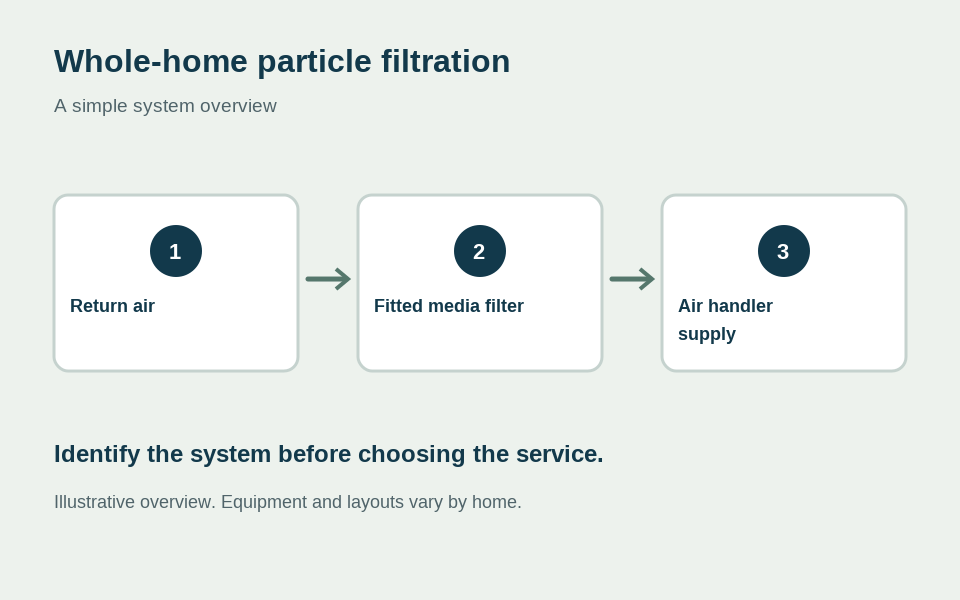
Whole-home air filtration uses the airflow of a compatible ducted heating and cooling system to capture particles passing through a filter. Choosing it requires attention to the cabinet, filter fit, blower and household concern. Harrisburg Heating and Cooling helps homeowners discuss filtration in Harrisburg without treating every odor, humidity issue or dusty surface as a reason to buy the same device.
Describe the concern: household dust, pet-related particles, pollen or another source. A useful discussion begins with what you want to reduce and whether it enters through normal household activity, leaks or building work. A device should match the concern rather than a vague promise of cleaner air.
Filters fit poorly or are difficult to change
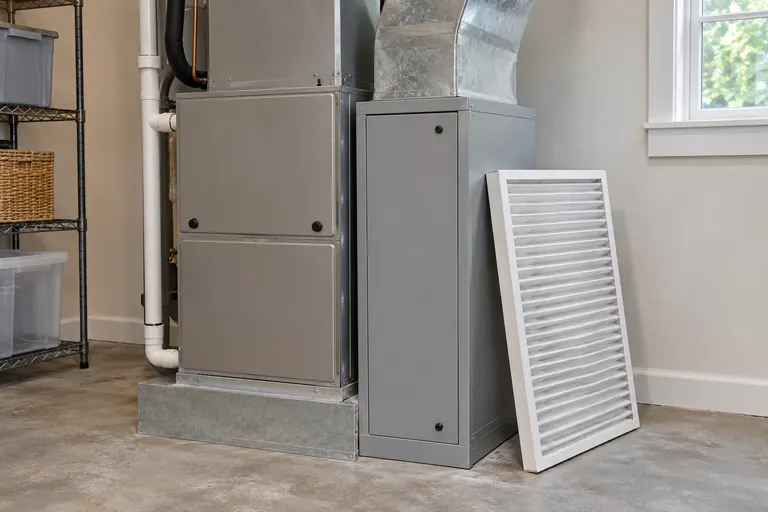
Gaps around a filter, a bent replacement or cramped access can affect practical performance and upkeep. Photograph the existing label and slot. A better cabinet arrangement may be worth discussing before choosing a higher rating for a filter that does not fit properly.
Airflow worsened after a filter upgrade
Note the old and new filter information and the changes you noticed. A filter needs to suit the system as well as the desired particle capture. Do not assume the highest available rating is the best choice without reviewing the equipment and air path.
You are comparing a filter with a purifier
Media filters, electronic devices and UV products work differently. Ask exactly what a proposed product does and what evidence supports the claim. A humidity, moisture or ventilation problem may need a different correction before any additional air-cleaning device is considered.
The system behind the symptom
See how the parts connect.
A comfort problem can involve more than the component you first notice. Identifying the equipment and describing what happens helps focus the service conversation.
Use the model label and owner manual for your actual system. Layouts, controls and service requirements vary.
Understand the work
What should the service cover?
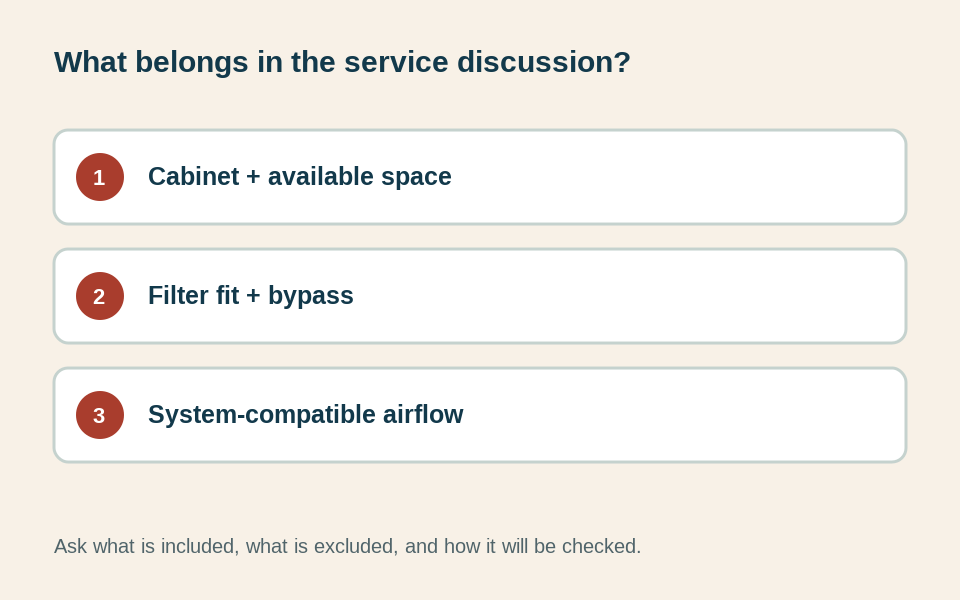
These are useful points to discuss. The right scope follows the actual equipment, condition and findings at your home.
01
Identify the concern and existing system
Discuss the household objective and the current furnace or air handler, return path and filter location. Homes without a suitable ducted system may need a different approach. Persistent moisture, a pollutant source or a damaged return should not be hidden behind an equipment recommendation.
02
Check cabinet fit and airflow compatibility
Ask how the proposed filter size, depth and rating suit the blower and available return space. Pressure and airflow checks can help assess restrictions. A filter should seat properly, be serviceable and avoid a bypass path around the media.
03
Compare the technologies accurately
Particle filtration is different from odor treatment, humidity control or UV treatment of equipment surfaces. Ask what the product can and cannot address. UV does not physically capture dust; claims about active purification should be assessed against the exact product and test conditions.
04
Plan installation and ongoing care
The proposal should identify any cabinet, duct transition, power or control work. Ask how operation will be checked afterward and how replacement media is obtained. Keep the filter model, access instructions and care schedule so the system remains practical to maintain.
Before approving work
What affects the quote?
Filter upgrade or cabinet installation
A compatible replacement filter differs from adding a deeper media cabinet or modifying the return plenum. Ask what physical work is included and whether access and airflow will be checked. An inexpensive filter is not a complete comparison with a cabinet installation.
Technology and system requirements
Media, electronic and other devices can have different installation and service needs. Ask about power, replacement components and verified product characteristics. Avoid paying for features unrelated to your concern, and do not assume every technology addresses particles, odors and moisture equally.
Ongoing ownership
Compare replacement media availability, cleaning requirements, access and any other consumables. A nominal change interval should be reviewed for the actual household and manufacturer instructions. Ask for the product details in writing so future maintenance does not depend on remembering a sales description.
Make the call useful
What to have ready.
Gather accessible information. Leave panels, wiring, fuel controls and refrigerant components to a qualified professional.
Photograph the current filter label, size and accessible slot, and note how often it becomes visibly loaded.
Provide furnace or air-handler model information and mention noise or airflow changes after filter replacement.
Describe the concern, where it occurs and any known moisture, renovation dust or source issue.
Identify maintenance preferences, available cabinet space and whether anyone struggles to reach the current filter.
Helpful answers
Whole-home air filtration questions
Practical guidance for Harrisburg homeowners considering this service.
Is the highest MERV rating always the best choice?+
The system must be able to move the needed air through the selected filter. EPA recommends an efficient filter that the system can accommodate. Ask about fit, return space and airflow rather than choosing a rating alone. A compatible installation and regular care both matter.
Will whole-home filtration remove every odor?+
A particle filter does not address every gas or odor source. Moisture, a drain problem, smoke or another source may need investigation and correction. Describe when and where the odor occurs. A filtration proposal should explain its limits rather than promising to eliminate every indoor-air concern.
Does UV light replace a particle filter?+
No. UV treatment and particle capture are different functions. EPA guidance explains that UVGI does not physically collect or remove particles. Ask what surface or airstream a device treats, what maintenance it needs and which exact claim is supported before comparing it with a media filter.
Can filtration guarantee allergy relief or a dust-free house?+
No. Air cleaning can reduce certain airborne particles under suitable conditions, but household sources, cleaning, ventilation and moisture still matter. It cannot promise a medical outcome or remove all settled dust. Evaluate the equipment for a defined purpose and retain practical source-control and maintenance habits.
Weak airflow in one room may involve a damaged branch, a return-air problem or a wider system restriction. Discuss duct repair, sealing and airflow findings before assuming cleaning or equipment replacement is the answer.
Give a working central AC system a seasonal review of airflow, drainage, controls and equipment condition. Identify an existing cooling problem when booking so it receives the right assessment.
Discuss seasonal furnace care, filter access, airflow and fuel-specific service needs. Keep routine maintenance separate from diagnosis when the system is already losing heat or shutting down.
References explain general equipment principles; they do not establish the condition of your system.
Harrisburg Heating and Cooling
Talk through the next step.
Tell us what your system is doing, which rooms are affected, and where you’re located. We’ll discuss the appropriate next step and current availability.