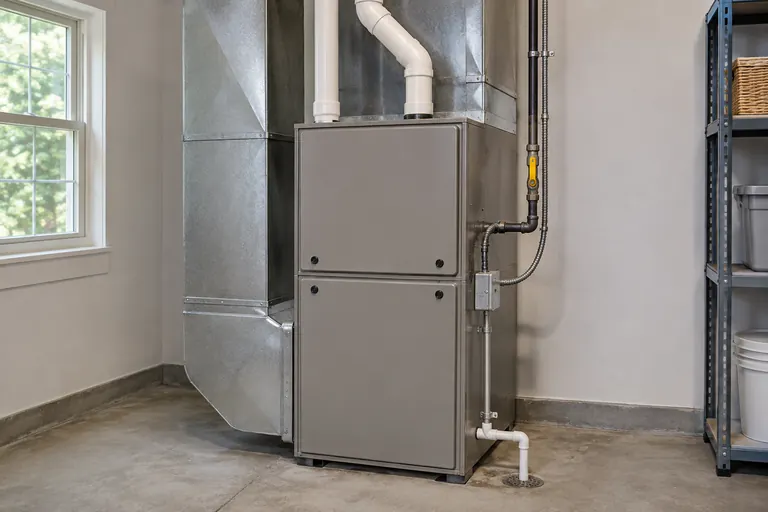
Furnace maintenance is a planned review of a working forced-air heating system, with attention suited to its fuel, controls and air-moving components. When contacting Harrisburg Heating and Cooling, say whether you need routine seasonal service or help with an existing no-heat problem. Confirm coverage for the specific furnace and fuel type, then ask what the visit includes and what record you will receive.
A planned visit gives you an opportunity to address service needs before depending on the furnace every day. Ask whether the proposed checks suit your exact equipment. A standard checklist should not assume every home has the same fuel or ignition system.
The last service record is unclear
If you have moved into a home or cannot find previous records, begin with equipment identification and current condition. Let the provider know about known repairs and modifications. Missing paperwork does not prove a problem, but it makes a documented starting point useful.
Filter changes are becoming difficult
A cramped slot, bent filter or poorly fitted cover deserves attention. Explain where the filter sits and what makes replacement awkward. The maintenance discussion can identify whether ordinary care is practical or whether access or filtration changes need a separate proposal.
Heating behavior has changed
A new noise, repeated shutdown, weak airflow or unusual odor may require repair investigation rather than preventive maintenance. Report it when booking. If there is a gas odor or a carbon monoxide alarm, leave the home and seek emergency assistance instead of waiting for maintenance.
The system behind the symptom
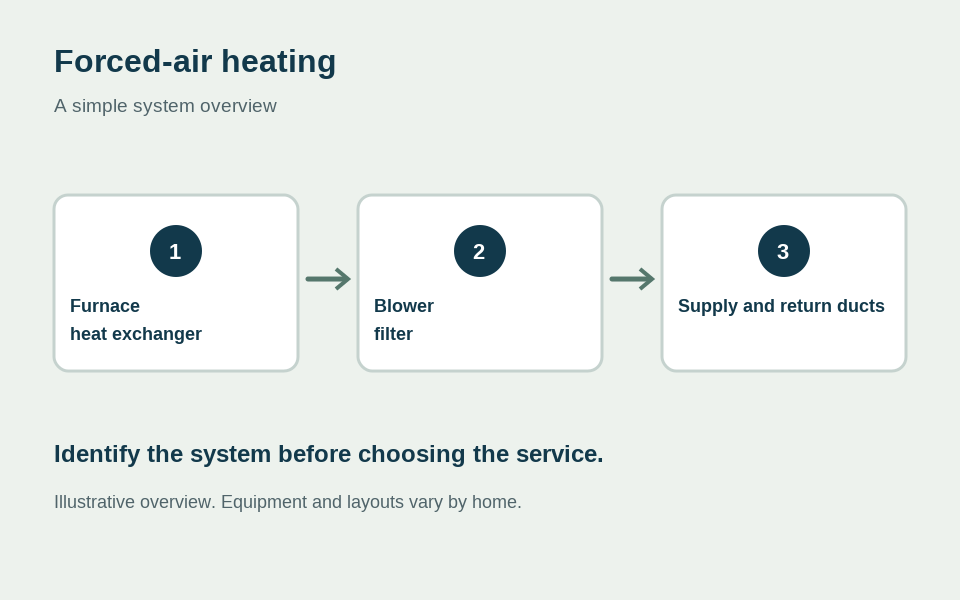
See how the parts connect.
A comfort problem can involve more than the component you first notice. Identifying the equipment and describing what happens helps focus the service conversation.
Use the model label and owner manual for your actual system. Layouts, controls and service requirements vary.
Understand the work
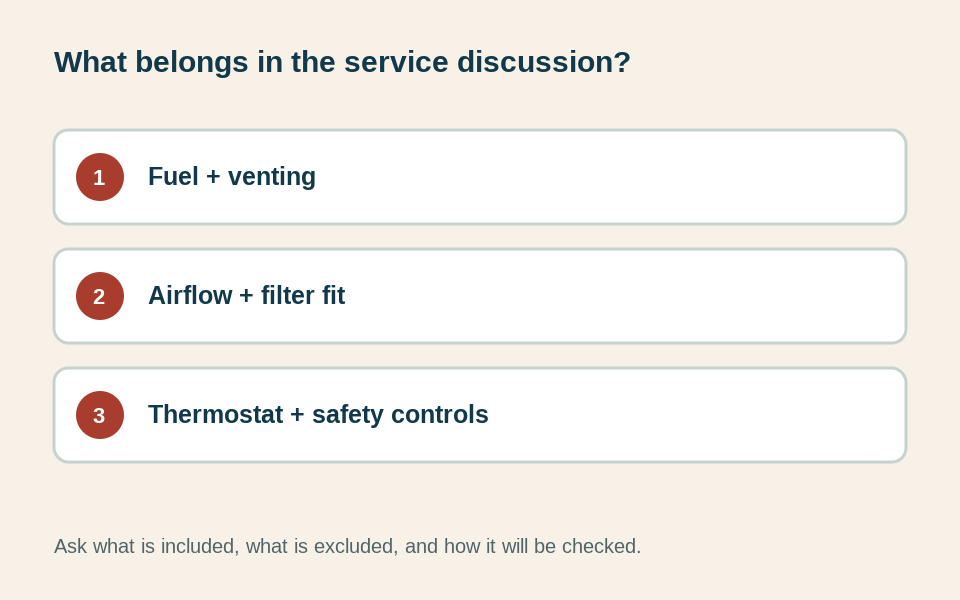
What should the service cover?
These are useful points to discuss. The right scope follows the actual equipment, condition and findings at your home.
01
Model-specific service planning
The furnace manual, fuel and service history determine appropriate care. Ask whether the visit includes the relevant burner, ignition, controls and air-moving checks for your system. Confirm any eligibility limits before booking, especially for older or unfamiliar equipment.
02
Airflow and owner care
Review filter type, fit, replacement access and unobstructed grilles. Describe any cold rooms or return noise. Routine service can flag a distribution concern, but duct measurements or redesign may be separate work. Ask what can be concluded from the checks performed.
03
Operating and safety-related observations
A professional review should be appropriate to the equipment and its operation, including relevant fuel and venting concerns where applicable. Discuss the purpose and limitations of those checks. A furnace service visit does not replace working CO alarms or an emergency response.
04
Findings and next actions
Request a record separating completed maintenance, items needing repair and conditions to monitor. Ask for an explanation of any recommended part replacement and whether operation should stop pending correction. Keep the record with the equipment manual for future service and ownership decisions.
Before approving work
What affects the quote?
The stated service checklist
A maintenance offer may include different tasks depending on fuel and furnace design. Ask what cleaning, testing and documentation are included. A generic tune-up label is not enough to compare the scope of two offers or know whether existing faults are covered.
Equipment condition and access
A heavily soiled blower, obstructed service area or damaged component may need work beyond ordinary maintenance. Tell the provider what is known beforehand. Ask for approval before extra work and make sure a maintenance recommendation does not become an unexplained repair charge.
Agreement terms and exclusions
For a recurring service plan, confirm which furnace is covered, visit frequency, included labor and exclusions. Ask about cancellation, renewal and how repairs are priced. Do not assume priority service, replacement parts or after-hours attendance are included unless the written terms say so.
Make the call useful
What to have ready.
Gather accessible information. Leave panels, wiring, fuel controls and refrigerant components to a qualified professional.
Identify the furnace fuel and model, and confirm the provider covers that equipment before scheduling.
Gather the owner manual, past maintenance notes and any warranty service requirements you want reviewed.
List changes in noise, cycling or room temperatures and explain whether they happen every heating cycle.
Provide safe access to the furnace, filter and relevant visible venting without removing panels yourself.
Helpful answers
Furnace maintenance questions
Practical guidance for Harrisburg homeowners considering this service.
Is a furnace tune-up the same for gas, oil and electric equipment?+
No. The equipment and fuel determine which tasks are relevant. Confirm service eligibility and ask for a checklist suited to your model. Burner service on a combustion appliance and checks on an electric furnace are not interchangeable, even though both systems move heated air through ducts.
Will furnace maintenance fix short cycling?+
It may reveal a condition related to the symptom, but an existing cycling problem should be reported as a repair concern. The cause could involve airflow, controls or another fault. Ask whether diagnosis is included and what findings support any work proposed beyond routine service.
How often should the filter be changed?+
Follow the equipment and filter instructions, then inspect according to household conditions. Filter depth, use, pets and renovation dust can affect loading. Ask the provider to show you the correct size and access point. A filter should fit properly without being crushed or leaving air gaps.
Can maintenance guarantee that the furnace will last through winter?+
No visit can guarantee future operation. Maintenance can document condition and identify issues visible during the checks, while intermittent and concealed defects may remain. Ask what was tested, what could not be checked and which observations would justify another service request.
Explain a no-heat, ignition, blower or cycling problem and confirm coverage for your furnace type. A clear account of the failure helps separate an equipment fault from a thermostat or airflow issue.
Compare media filtration with your HVAC system, filter space and maintenance needs in view. Understand what particle filters can do, which concerns need another approach and why airflow compatibility matters.
Plan a furnace replacement around heating needs, venting, duct capacity and connected AC equipment. Compare a complete installation scope instead of choosing from a furnace price alone.
References explain general equipment principles; they do not establish the condition of your system.
Harrisburg Heating and Cooling
Talk through the next step.
Tell us what your system is doing, which rooms are affected, and where you’re located. We’ll discuss the appropriate next step and current availability.