Furnace installation should fit the home, its available fuel and the way heat reaches each room. Whether you are comparing replacement with a repair or planning a larger renovation in Harrisburg, start with the existing system and the comfort concerns you want addressed. Harrisburg Heating and Cooling can discuss the project requirements; confirm the proposed fuel type and equipment eligibility before choosing a furnace.
Ask what failed, whether a repair is available and which conditions make a new furnace worth considering. An installation comparison should be based on actual equipment findings. A repair recommendation and a sales estimate answer different questions and should be clear about their assumptions.
The old system has recurring problems
Gather the history rather than relying on memory. Repeated repairs to one unresolved cause differ from unrelated wear items over many years. Share records so the replacement discussion can address reliability, parts availability and the condition of the connected system.
A major renovation changes heating needs
Insulation work, an addition or a change in room use can alter the heating requirement. Discuss that work before equipment is ordered. A replacement based only on the old nameplate may miss changes that affect comfort, capacity and distribution.
Venting or placement needs to change
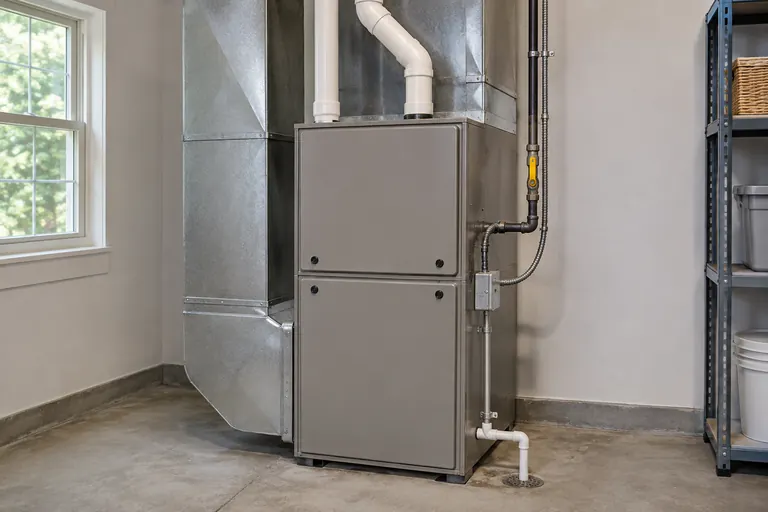
A different furnace design can require changes to exhaust, combustion air, drainage or service clearances. A finished basement or tight utility room makes planning especially important. Ask how the proposed layout will remain accessible for future filter changes and service.
The system behind the symptom
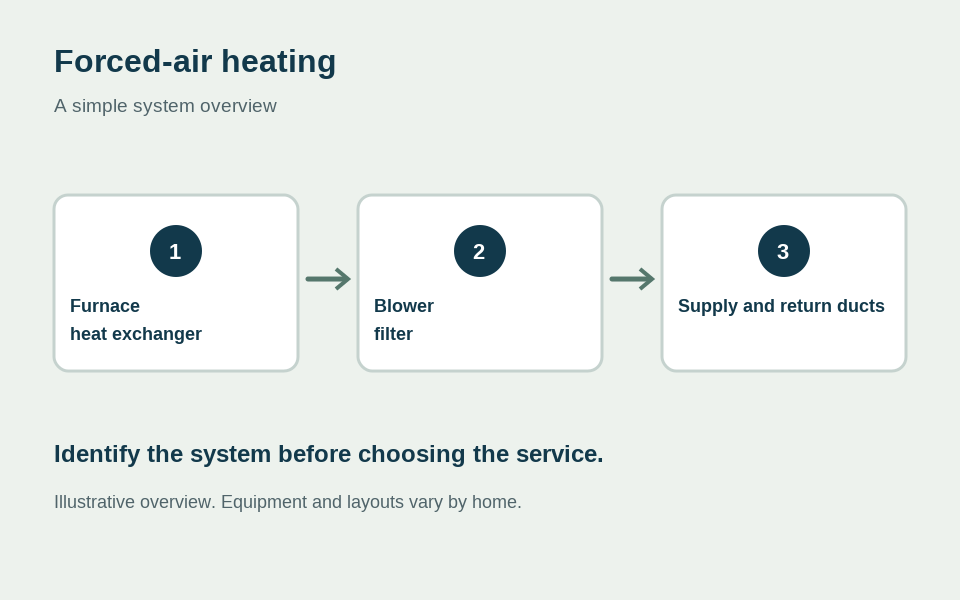
See how the parts connect.
A comfort problem can involve more than the component you first notice. Identifying the equipment and describing what happens helps focus the service conversation.
Use the model label and owner manual for your actual system. Layouts, controls and service requirements vary.
Understand the work
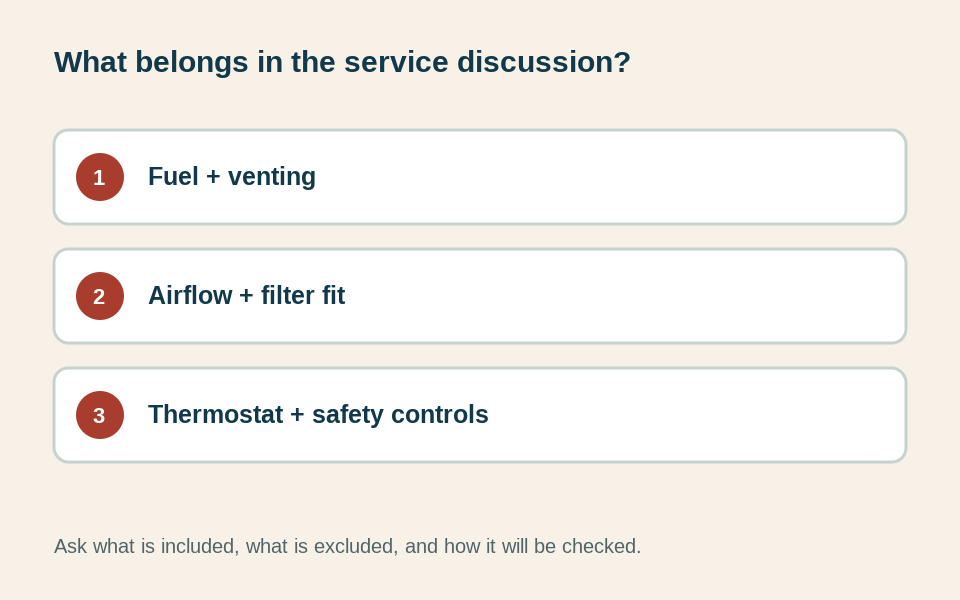
What should the service cover?
These are useful points to discuss. The right scope follows the actual equipment, condition and findings at your home.
01
Sizing for the actual building
The capacity recommendation should consider heat loss and the characteristics of the house. Ask how the proposed furnace was sized and how it will serve rooms that currently run cold. Floor area and the old furnace label are only part of the picture.
02
Fuel, venting and drainage
Confirm that the installation service covers the chosen fuel and furnace model. The proposal should identify relevant fuel connections, exhaust arrangements, combustion-air needs and condensate handling. Work outside the heating contractor scope should have a clear responsible party.
03
Ducts and connected cooling
The blower must suit the heating and cooling system it serves. Discuss filter access, return capacity, supply transitions and any existing indoor AC coil. Ask which connected components will stay and how their compatibility and airflow requirements will be checked.
04
Completion and operating information
A handover should explain startup checks, thermostat settings and routine owner care. Keep the equipment information, written warranty terms and installation record. Confirm any required permits and manufacturer registration responsibilities as part of the agreed project rather than after the work.
Before approving work
What affects the quote?
Equipment configuration
Heating capacity, operating stages, blower features and thermostat requirements affect equipment selection. Ask what a proposed feature changes for your household. Higher published efficiency alone does not explain installation quality, sound, room comfort or the cost of supporting modifications.
Connections and supporting work
Changes to venting, electrical supply, condensate drainage or duct transitions can alter project scope. A fuel conversion is more involved than a like-for-like replacement. Confirm whether related trade work is included or separately arranged before comparing proposals.
Removal, permits and warranty terms
Ask about old-equipment disposal, required permits, startup documentation and finish repairs. Compare written labor and manufacturer warranty terms separately. Any available incentive or financing offer needs current eligibility confirmation; it should not be treated as an automatic reduction in cost.
Make the call useful
What to have ready.
Gather accessible information. Leave panels, wiring, fuel controls and refrigerant components to a qualified professional.
Gather existing furnace, thermostat and connected cooling equipment model numbers and recent repair records.
Describe cold rooms, noisy airflow, filter access problems and any planned building improvements.
Identify the existing fuel and note whether a fuel conversion is being considered rather than assumed.
Mention finished enclosures, narrow stairs, shared access or a schedule that limits equipment removal.
Helpful answers
Furnace installation questions
Practical guidance for Harrisburg homeowners considering this service.
Is a bigger furnace better for cold rooms?+
Not necessarily. Restricted ducts, inadequate return paths or building heat loss may explain the room problem. Oversizing can introduce its own comfort issues. Ask for a sizing method and a specific explanation of how the proposed work addresses the rooms you have identified.
Can the furnace be replaced while keeping the AC?+
Sometimes, but the blower, indoor coil, controls and physical arrangement must be reviewed together. Provide both heating and cooling model numbers. Ask the estimate to state which parts remain and whether any coil, duct transition or control changes are required for the combination.
Does a new furnace require different exhaust piping?+
It depends on the existing and proposed equipment. Venting arrangements are model-specific, and some installations also need condensate drainage or changes to combustion air. Ask for those details before accepting the scope. Do not assume an existing chimney or pipe can remain unchanged.
How should I compare two furnace proposals?+
Compare the equipment, sizing basis, duct and venting work, electrical assumptions, removal, permits and startup checks. Then review warranty terms and exclusions. If one proposal omits supporting work included by another, ask for clarification before judging either one by its total price.
Explain a no-heat, ignition, blower or cycling problem and confirm coverage for your furnace type. A clear account of the failure helps separate an equipment fault from a thermostat or airflow issue.
Discuss seasonal furnace care, filter access, airflow and fuel-specific service needs. Keep routine maintenance separate from diagnosis when the system is already losing heat or shutting down.
Check smart-thermostat compatibility, power requirements and heating or cooling stages before replacement. Proper controls depend on your equipment and wiring, not simply the number of wires at the wall.
References explain general equipment principles; they do not establish the condition of your system.
Harrisburg Heating and Cooling
Talk through the next step.
Tell us what your system is doing, which rooms are affected, and where you’re located. We’ll discuss the appropriate next step and current availability.