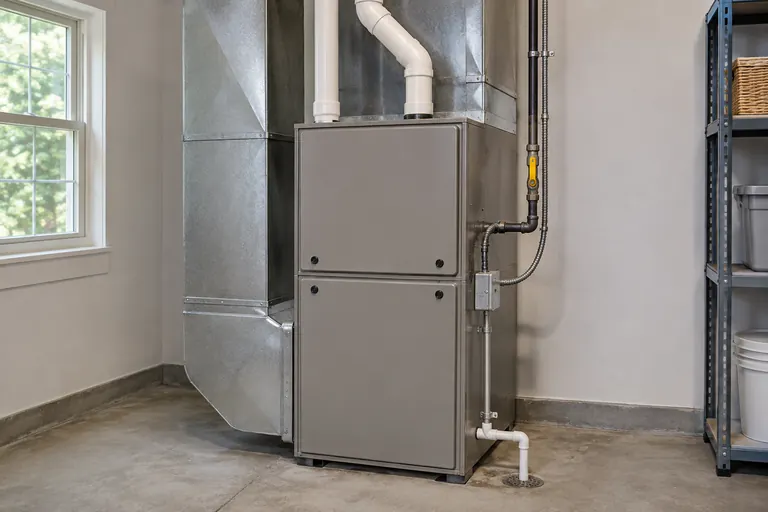
Furnace repair is the right starting point when a forced-air heating system will not start, loses heat partway through a cycle or distributes air without warming the home. Contact Harrisburg Heating and Cooling with the fuel type, equipment model and symptoms. Confirm service eligibility for your particular gas, propane, oil or electric equipment before arranging a visit; a furnace and a boiler require different work.
Notice whether the equipment stays silent, starts briefly or runs its blower for an extended period. That sequence helps describe the failure. Avoid repeated resets or attempts to relight unfamiliar equipment; follow the owner manual and let a professional investigate.
Heat stops before the thermostat is satisfied
A furnace that repeatedly cuts out may have an airflow, control, ignition or other problem. Note whether the blower continues after heat stops. Do not bypass a switch or hold a panel in place to force operation.
The house heats unevenly
Cold rooms can involve supply ducts, return paths, room heat loss or equipment operation. Record which rooms are affected and whether the issue is new. An equipment repair may be appropriate, but duct or building improvements can be separate parts of the solution.
A new sound or warning appears
Record a displayed fault code or unusual noise from a safe distance. The exact message matters more than a guess about a part. If you smell gas, leave the building and call the gas utility or emergency services from a safe location.
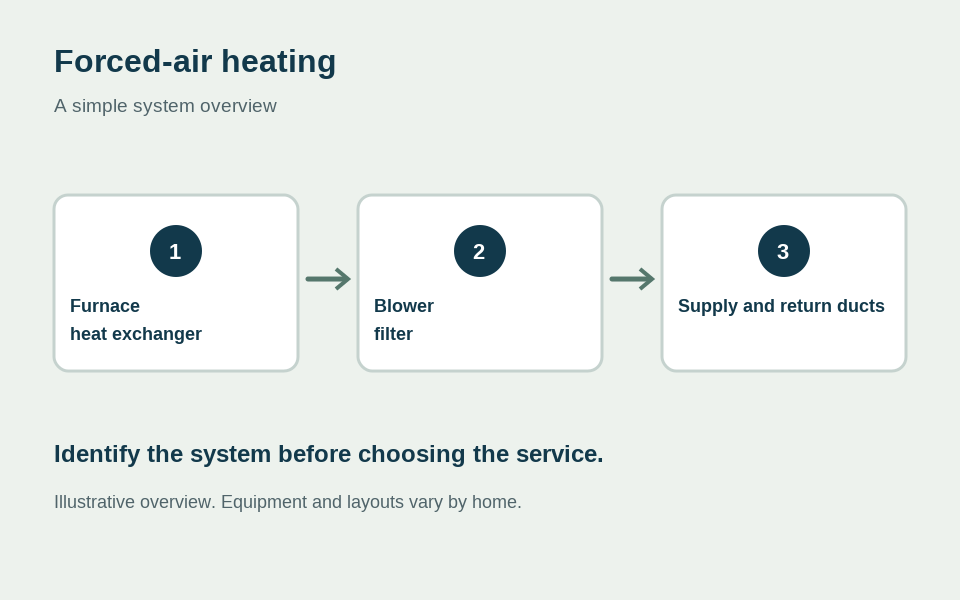
The system behind the symptom
See how the parts connect.
A comfort problem can involve more than the component you first notice. Identifying the equipment and describing what happens helps focus the service conversation.
Use the model label and owner manual for your actual system. Layouts, controls and service requirements vary.
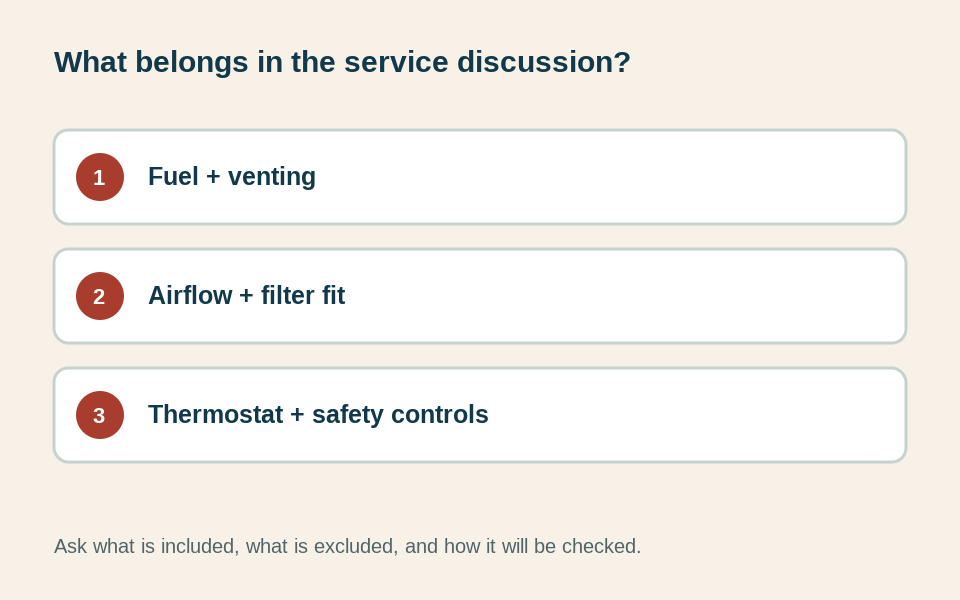
Understand the work
What should the service cover?
These are useful points to discuss. The right scope follows the actual equipment, condition and findings at your home.
01
Confirm the heating system
Identify the furnace fuel, model, thermostat and any connected cooling equipment. This prevents a request for hot-water radiator repair from being booked as forced-air service. Mention a heat pump or backup heater if it is part of the same system.
02
Follow the failure
A repair assessment may involve the thermostat request, starting sequence, controls, blower and accessible air paths. The checks should follow the actual complaint. Ask which test supports the proposed repair, especially if a fault code has several possible causes.
03
Discuss fuel and safety checks
Combustion equipment needs work suited to its fuel and design. Ask which relevant checks are included and whether a suspected safety concern changes the immediate plan. Carbon monoxide cannot be detected by smell; a CO alarm or suspected exposure requires emergency action.
04
Review findings before approving work
Request the proposed repair, part requirements and follow-up checks in plain language. If service reveals a separate duct, venting or electrical concern, ask whether it must be corrected before operation and whether a different trade or additional visit is needed.
Before approving work
What affects the quote?
Type of furnace and failed part
Ignition, blower and control components vary by model and fuel. A similar symptom can require different work on different furnaces. Ask for a part-specific proposal and confirmation of availability before relying on a completion date.
Diagnostic time and intermittent operation
A failure that occurs only at startup or during a long heating cycle may require more observation. Confirm assessment charges, what the visit includes and whether additional testing or a return visit would be separately priced.
Connected system conditions
Restricted ducts, venting defects or damaged wiring may affect whether a part replacement is enough. Ask the estimate to distinguish the furnace repair from necessary supporting work and optional recommendations. Compare replacement only after understanding the actual defect.
Make the call useful
What to have ready.
Gather accessible information. Leave panels, wiring, fuel controls and refrigerant components to a qualified professional.
Provide the fuel type and readable model and serial numbers, or ask how to identify them safely.
Note the thermostat message, the sequence before shutdown and when reliable heat was last available.
Gather service records and disclose recent filter changes, fuel interruptions, renovations or thermostat work.
Clear access and mention vulnerable occupants or falling indoor temperatures when discussing service availability.
Helpful answers
Furnace repair questions
Practical guidance for Harrisburg homeowners considering this service.
Why does the furnace blower run without heat?+
The fan setting, normal startup or shutdown behavior, a heating fault or a protective control can all affect what you feel at a vent. Note whether the thermostat is set to automatic fan operation and how long the condition lasts. Those observations do not establish a diagnosis.
Should I reset the furnace repeatedly?+
No. Follow the instructions for your exact equipment and avoid repeated attempts when the fault returns. A reset can clear information needed for diagnosis and does not correct the cause. Do not bypass controls, open fuel lines or attempt unfamiliar ignition procedures.
Is a cold upstairs room always a furnace problem?+
No. Duct layout, return-air paths, insulation and air leakage can affect one room while the furnace heats other rooms normally. Describe whether all rooms lose heat together. Ask whether the assessment should include airflow and distribution rather than assuming a larger furnace is needed.
What should I do if a carbon monoxide alarm sounds?+
Leave the building immediately and contact emergency services from outside. Do not use a service inquiry as a substitute for emergency assistance or re-enter until responders say it is safe. Carbon monoxide is odorless, so the absence of a smell does not make the situation safe.
Discuss seasonal furnace care, filter access, airflow and fuel-specific service needs. Keep routine maintenance separate from diagnosis when the system is already losing heat or shutting down.
Plan a furnace replacement around heating needs, venting, duct capacity and connected AC equipment. Compare a complete installation scope instead of choosing from a furnace price alone.
Weak airflow in one room may involve a damaged branch, a return-air problem or a wider system restriction. Discuss duct repair, sealing and airflow findings before assuming cleaning or equipment replacement is the answer.
References explain general equipment principles; they do not establish the condition of your system.
Harrisburg Heating and Cooling
Talk through the next step.
Tell us what your system is doing, which rooms are affected, and where you’re located. We’ll discuss the appropriate next step and current availability.