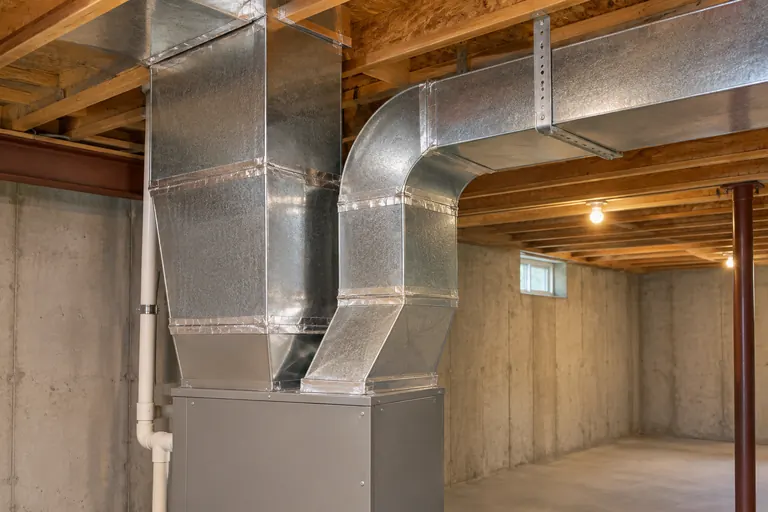
Ductwork repair addresses the air-distribution system: disconnected branches, damaged sections, failed connections and other conditions that stop air reaching the intended rooms. Harrisburg Heating and Cooling helps homeowners discuss duct repair in Harrisburg with attention to the symptom and accessible duct route. Cleaning, sealing, repairing and redesigning ducts are different tasks; understanding which one is needed makes a quote more useful.
Note whether the difference is new and whether it changes when the room door closes. An obstructed grille, damaged branch or return path can affect the complaint. Describing the pattern helps decide whether the assessment should focus on one run or the wider system.
A visible duct is disconnected or crushed
Photograph an accessible problem without entering an unsafe attic or crawl space. Mention storage, pest activity or building work that may have disturbed the route. A damaged section may be repairable, while poor sizing or layout can require a different scope.
Air noise has changed
Whistling, rattling or a louder return grille can point to several conditions. Record where the sound occurs and whether it follows a filter change or equipment replacement. Noise alone does not prove a leak, and sealing a random joint may miss the source.
A new system has not solved room comfort
If rooms remain uncomfortable after equipment work, share the installation details and previous complaints. Duct leakage, restricted paths and building heat gain can remain after a unit is replaced. Ask what observations or measurements would distinguish those possibilities.
The system behind the symptom
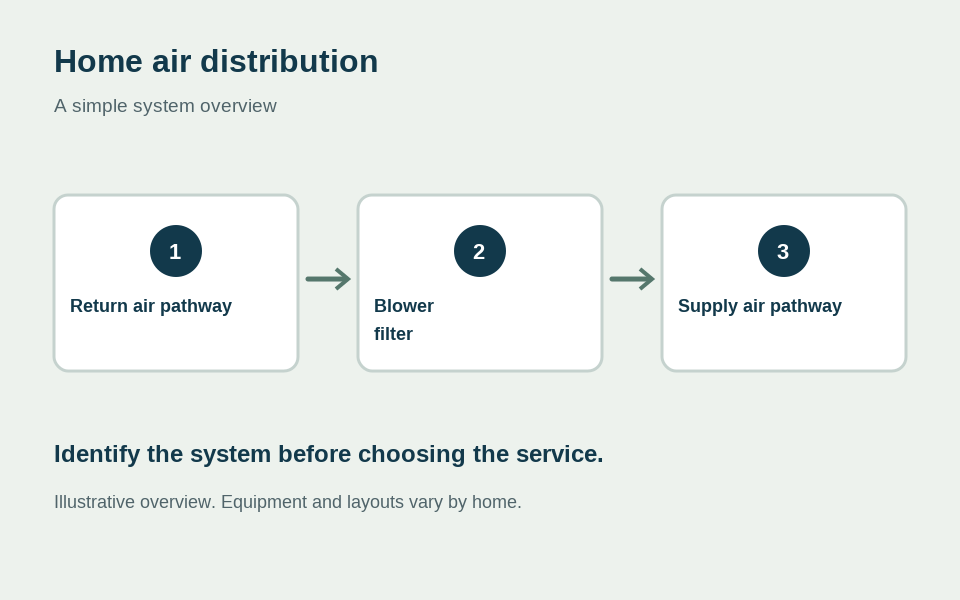
See how the parts connect.
A comfort problem can involve more than the component you first notice. Identifying the equipment and describing what happens helps focus the service conversation.
Use the model label and owner manual for your actual system. Layouts, controls and service requirements vary.
Understand the work
What should the service cover?
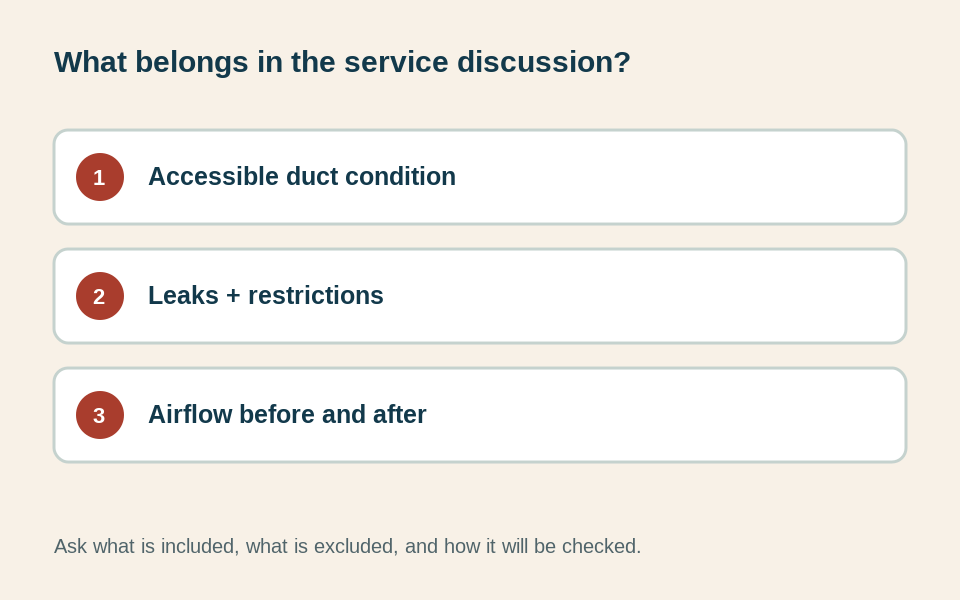
These are useful points to discuss. The right scope follows the actual equipment, condition and findings at your home.
01
Trace the affected air path
A useful review follows supply and return paths serving the complaint where access permits. Describe the rooms and visible route. Ask which sections can be inspected and which remain concealed, so a repair proposal does not imply that every hidden connection has been seen.
02
Separate cleaning from physical repair
Cleaning removes material from inside the duct; repair addresses physical damage or failed connections. Sealing closes leakage paths, while redesign changes capacity or layout. Ask which finding supports each proposed task and whether more than one kind of work is actually necessary.
03
Define materials, access and restoration
Duct type, damaged length, insulation and support affect the repair method. Ask how the repaired section will be joined and supported. Wall or ceiling openings, pest remediation and finish repairs should be identified explicitly rather than left as assumptions.
04
Check the outcome
Ask how airflow and the reported symptom will be reviewed after repair. Before-and-after observations or measurements can help explain what changed. If a room remains uncomfortable because of return paths, insulation or design, request a clear next recommendation instead of an unsupported promise.
Before approving work
What affects the quote?
Accessible damage or concealed work
An exposed disconnected run differs from a fault behind a finished ceiling. Ask whether access openings are included and who restores them. If the cause cannot be confirmed from accessible areas, agree on the next investigative step before broad removal or replacement is proposed.
Repair length and material
Flexible duct, metal runs, insulation and supports require different work. The condition of adjoining sections also matters. A written scope should identify what is repaired or replaced and avoid treating a whole-system replacement as the default for one damaged branch.
Distribution changes beyond repair
An undersized return, an addition or a room without a suitable air path may need design changes rather than patching. Compare that work separately from leak repair. Ask whether balancing, measurements and any equipment adjustments are included in the proposal.
Make the call useful
What to have ready.
Gather accessible information. Leave panels, wiring, fuel controls and refrigerant components to a qualified professional.
List affected rooms, the timing of the problem and whether closing interior doors changes comfort.
Photograph safely accessible damaged ducts and identify any recent storage, renovation or pest disturbance.
Provide equipment and filter details, particularly if noise or airflow changed after an upgrade.
Explain attic, basement or crawl-space access and mention concealed runs behind finished surfaces.
Helpful answers
Ductwork repair questions
Practical guidance for Harrisburg homeowners considering this service.
Will duct cleaning fix a disconnected or leaking duct?+
No. Removing dust does not reconnect a branch or seal a failed joint. An inspection should establish whether cleaning, sealing, physical repair or another correction is appropriate. Ask for the specific finding and the work that addresses it before approving a bundle of unrelated services.
Does weak airflow mean I need larger HVAC equipment?+
Not necessarily. A restriction, damaged duct or limited return path may keep an otherwise working system from delivering air. Describe whether the issue affects one room or the entire house. Ask for airflow and distribution to be evaluated before increasing equipment capacity.
Can every duct be repaired without opening walls?+
No. Access depends on the route and building construction. Some problems are visible in a basement or attic; others remain behind finished surfaces. Ask what can be inspected, what remains uncertain and whether opening and restoring a wall or ceiling is included in the agreed scope.
Can I seal visible ducts with ordinary cloth duct tape?+
Ordinary cloth duct tape is not a durable duct-sealing solution. ENERGY STAR recommends suitable mastic or metal tape for appropriate accessible applications. A moving joint, damaged support or crushed run may need physical repair as well as sealing, so do not cover a larger defect and assume it is corrected.
Warm air, ice, water around the indoor unit or an outdoor unit that will not start all call for different checks. Request central AC repair with a clear description of what changed.
Explore a ducted heat pump with attention to winter capacity, backup heat, electrical needs and existing ducts. Compare the whole system and its control strategy before selecting equipment.
Compare media filtration with your HVAC system, filter space and maintenance needs in view. Understand what particle filters can do, which concerns need another approach and why airflow compatibility matters.
References explain general equipment principles; they do not establish the condition of your system.
Harrisburg Heating and Cooling
Talk through the next step.
Tell us what your system is doing, which rooms are affected, and where you’re located. We’ll discuss the appropriate next step and current availability.