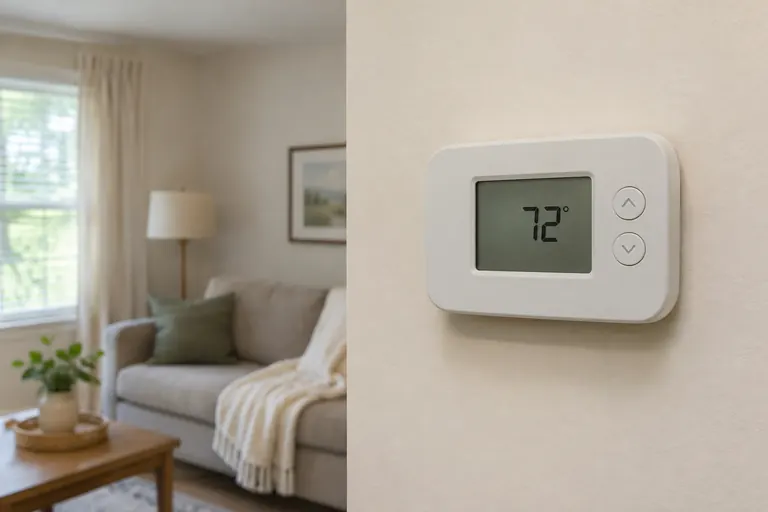
Thermostat installation begins with compatibility, not with the features on the front of a new screen. The control must suit the heating and cooling equipment, voltage, wiring and any zones or backup heat. Harrisburg Heating and Cooling helps homeowners discuss replacement and smart-thermostat installation in Harrisburg with those details in view. Share the existing equipment and thermostat models before buying a replacement.
Decide which everyday functions matter: a readable display, a schedule, app access or room sensors. Then check whether a suitable thermostat supports the system. A feature-rich model can be the wrong choice for an older control arrangement or proprietary communicating equipment.
The existing display loses power
Battery, power-supply, wiring and equipment faults can have similar effects at the thermostat. Explain whether the heating or cooling also stops. Buying a new thermostat before investigating may leave the actual problem unresolved, so ask whether diagnosis should come before replacement.
The home has zones or backup heat
Multiple thermostats, a zone panel, heat-pump backup or combined equipment can affect compatibility. Provide the model information you have. Wire colors and a photograph of the display alone do not identify all the controls involved.
The thermostat is poorly placed
Sunlight, nearby supply air, drafts or the use of a hallway can affect how the control represents the home. Explain the comfort concern before choosing a new location. Moving the thermostat may involve wiring and wall repairs beyond a straightforward replacement.
The system behind the symptom
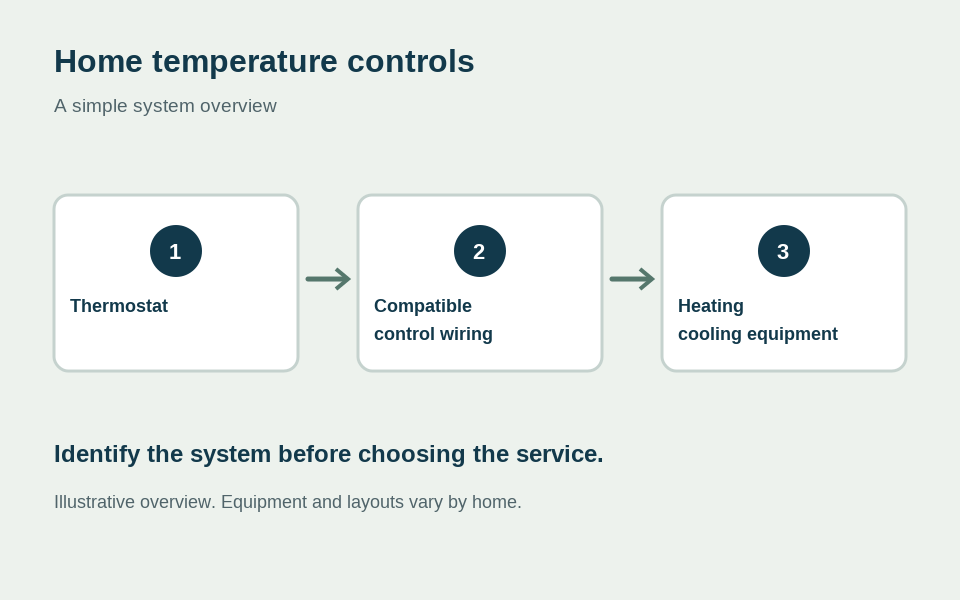
See how the parts connect.
A comfort problem can involve more than the component you first notice. Identifying the equipment and describing what happens helps focus the service conversation.
Use the model label and owner manual for your actual system. Layouts, controls and service requirements vary.
Understand the work
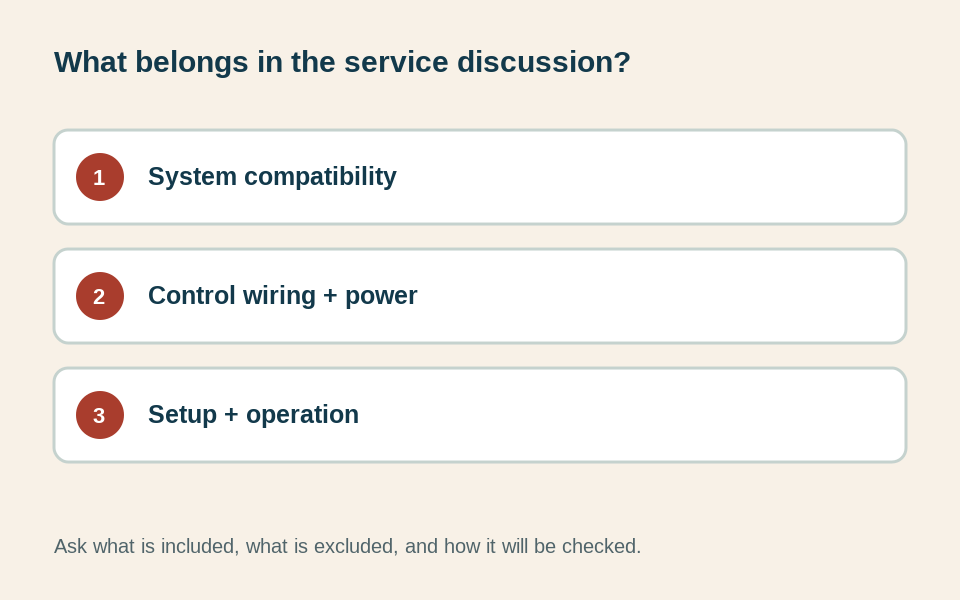
What should the service cover?
These are useful points to discuss. The right scope follows the actual equipment, condition and findings at your home.
01
Identify the system and control requirements
Ask for compatibility to be checked against equipment models, operating stages and the existing wiring arrangement. Low-voltage, line-voltage, millivolt and proprietary controls are not interchangeable. Confirm service eligibility for unusual systems rather than assuming a standard smart thermostat can be fitted.
02
Resolve power and wiring questions
Some thermostats need a common wire or a manufacturer-approved power solution. Ask how the selected model will receive reliable power and whether new cable is needed. An unused wire at the wall still needs its connection checked at the equipment.
03
Configure the actual equipment
Settings must reflect the connected furnace, boiler or ducted heat pump and its controls. Ask which heating, cooling, fan and backup functions will be checked. Generic factory settings or successful Wi-Fi pairing do not establish that the equipment sequence is correct.
04
Explain everyday use and access
A handover should cover schedules, hold settings, batteries if applicable and any owner app setup. The homeowner should control their own account and recovery information. Discuss what works if internet access is lost and retain the model instructions for later changes.
Before approving work
What affects the quote?
Control compatibility
A straightforward compatible replacement differs from a change involving proprietary controls, zoning or multiple heating stages. Ask the proposal to identify the selected model and supported functions. Confirm whether a thermostat you already purchased is suitable before assuming installation can proceed.
Power and cable access
Existing cable, available conductors and the equipment connection affect the work. Running new wire through finished walls or fitting an approved power accessory may change scope. Ask about wall openings and finish repairs instead of comparing a basic replacement price with a wiring project.
Location and setup
Relocation, room sensors and connected setup can add tasks. Clarify what programming, owner training and operation checks are included. Ask whether an existing equipment fault needs separate diagnosis and whether optional app services carry their own terms or subscription requirements.
Make the call useful
What to have ready.
Gather accessible information. Leave panels, wiring, fuel controls and refrigerant components to a qualified professional.
Gather thermostat and heating or cooling model numbers, including any zone-panel information.
List desired features and any existing power loss, inaccurate readings or unexpected equipment operation.
Mention boiler zones, heat-pump backup, proprietary controls or a planned thermostat relocation.
If selecting a connected model, have your own phone and household Wi-Fi access available for owner setup.
Helpful answers
Thermostat installation questions
Practical guidance for Harrisburg homeowners considering this service.
Do all smart thermostats need a C-wire?+
Requirements depend on the thermostat model and HVAC system. Check the manufacturer compatibility guidance for the exact combination. A power accessory may be suitable in some cases, while others need new cable or a different control. Do not choose wiring connections by color alone.
Can a smart thermostat work with my boiler?+
Some can, but the boiler control, voltage, zoning and available power need review. A simple heat-only system and a multi-zone arrangement may have different requirements. Provide equipment and existing thermostat details before purchasing, and confirm service coverage for the specific configuration.
Will a new thermostat fix a room that is always cold?+
It depends on the cause. Location or control behavior can contribute, but ducts, emitters, insulation and air leakage may be more important. Explain which rooms differ and when. A room sensor changes what temperature is measured; it does not repair an obstructed duct or inadequate heat delivery.
What if my heat pump runs incorrectly after a thermostat change?+
Report the change, the selected mode and the behavior you observe. Heat-pump staging and changeover settings must suit the equipment. Avoid experimenting with installer options or moving wires to trial different combinations. Ask for compatibility and configuration to be checked before normal use continues.
Request help for a ducted heat pump that loses heating or cooling, struggles with ice or uses backup heat unexpectedly. Record the mode, thermostat message and rooms affected before discussing service.
Explain a no-heat, ignition, blower or cycling problem and confirm coverage for your furnace type. A clear account of the failure helps separate an equipment fault from a thermostat or airflow issue.
Describe no heat, a cold zone, unusual pressure behavior or a visible leak. Confirm the boiler fuel and whether the system uses hot water or steam so the service request fits the equipment.
References explain general equipment principles; they do not establish the condition of your system.
Harrisburg Heating and Cooling
Talk through the next step.
Tell us what your system is doing, which rooms are affected, and where you’re located. We’ll discuss the appropriate next step and current availability.