Uneven temperatures, a clammy room, and an air conditioner that will not start call for different evaluations. For heating and cooling help in Lemoyne, contact Harrisburg Heating and Cooling to discuss what your system is doing and confirm availability at your address. The details below can help you separate equipment symptoms from drainage concerns and compare the full scope of a repair or replacement.
Use Lemoyne's property-specific planning resources
The borough separates code enforcement, planning and zoning, and stormwater services. For equipment replacement, describe the project to the relevant office instead of relying on a general home-improvement rule. A change involving a new outdoor location or wall opening raises different questions from maintaining equipment in place.
Check mapped conditions rather than assuming flood risk
Lemoyne maintains floodplain-management provisions based on mapped areas. A borough address alone does not tell you a property's designation. When the site is in a mapped hazard area, confirm requirements before relocating mechanical equipment. If equipment has contacted floodwater, leave it off until qualified professionals determine the safe next steps.
Keep equipment projects compatible with drainage
The municipal stormwater department explains how runoff moves through the borough's drainage system. When replacing a pad or altering landscaping, discuss the water route around the equipment and foundation. Preserve appropriate drainage and service access; do not direct water toward a neighbor or assume HVAC condensate should connect to a stormwater feature.
Know your location
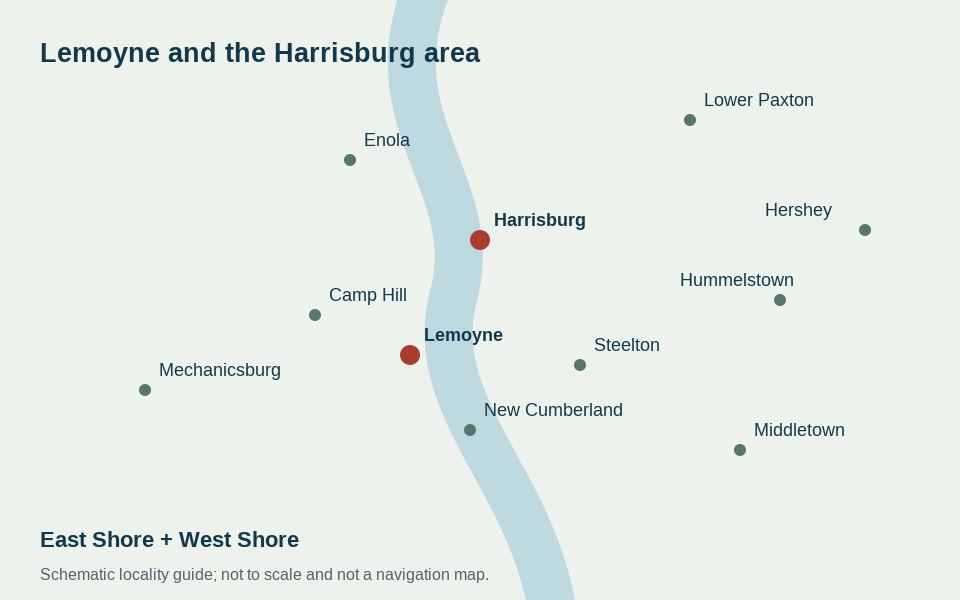
Lemoyne in the Harrisburg area.
A place name helps start the conversation. The full street address and municipality help clarify site access and which local resources apply to your project.
This guide shows community relationships, not a business office or a guaranteed service radius.
These situations may apply to your property. A site-specific review is needed before choosing equipment or changes.
A cool house that still feels clammy
If the thermostat reaches its setting but rooms feel humid, note the timing, fan setting, and any basement moisture. The evaluation may consider run time, system sizing, airflow, and moisture entry. Keep rain-related dampness separate from air-conditioner operation when describing the symptoms. Replacing the thermostat alone may not address the underlying problem.
An outdoor unit with limited working room
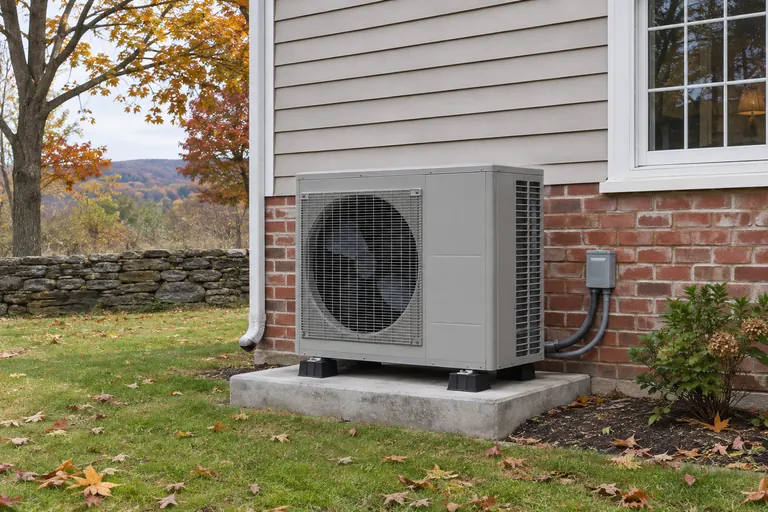
If a fence, hedge, walkway, or neighboring building restricts access, share photos before discussing a replacement. Equipment needs room for airflow and future service, and the proposed model may have different clearance requirements. A complete estimate should explain any pad, piping, electrical, or access changes rather than assuming the existing arrangement can simply be copied.
Repairing the existing furnace or changing the system
Ask for the identified fault, the recommended repair, and the condition of related components. If replacement is also proposed, compare that scope with a repair that addresses the current problem. Include fuel type, venting, electrical work, and controls. Age by itself does not explain the cause of a failure or define the best next step.
Get ready for the conversation
A little information goes a long way.
Give the exact Lemoyne street address and identify any known floodplain or property restrictions.
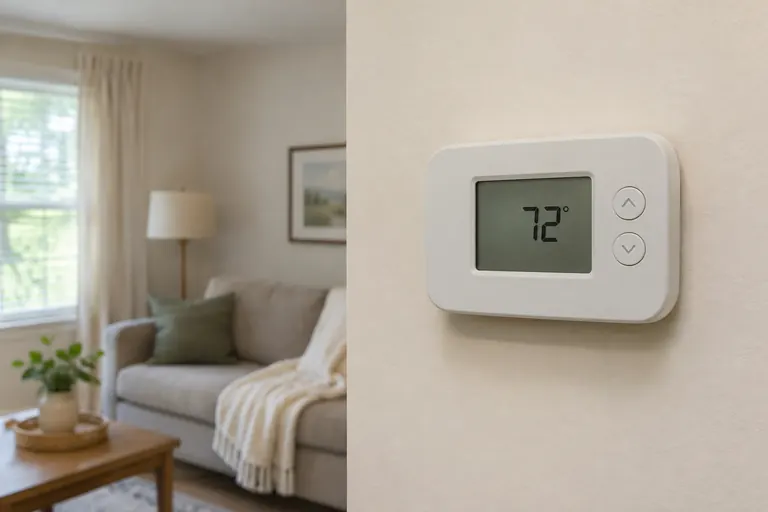
Record thermostat settings and whether humidity, temperature, or noise is the main concern.
Photograph the outdoor pad and drainage area from a safe position without opening equipment.
Explain parking, rear entrances, basement access, and whether an owner or tenant will provide entry.
Warm air, ice, water around the indoor unit or an outdoor unit that will not start all call for different checks. Request central AC repair with a clear description of what changed.
Give a working central AC system a seasonal review of airflow, drainage, controls and equipment condition. Identify an existing cooling problem when booking so it receives the right assessment.
Explain a no-heat, ignition, blower or cycling problem and confirm coverage for your furnace type. A clear account of the failure helps separate an equipment fault from a thermostat or airflow issue.
Plan a furnace replacement around heating needs, venting, duct capacity and connected AC equipment. Compare a complete installation scope instead of choosing from a furnace price alone.
Check smart-thermostat compatibility, power requirements and heating or cooling stages before replacement. Proper controls depend on your equipment and wiring, not simply the number of wires at the wall.
Can air conditioning solve water entering my Lemoyne basement?+
Air conditioning can remove moisture from indoor air during normal operation, but it does not correct groundwater, roof drainage, or water entering through the building. Describe where and when moisture appears so HVAC concerns can be separated from a drainage or building-envelope problem.
Is every Lemoyne property in a floodplain?+
Do not infer flood designation from the town name. Check the specific parcel against current official mapping and ask the borough about proposed work when appropriate. Equipment placement and flood exposure should be assessed for the actual property rather than generalized across the borough.
What should I include when requesting an AC repair discussion?+
Provide your address, indoor and outdoor model information if accessible, and whether the unit runs, blows warm air, leaks, or trips a breaker. Mention any recent maintenance or electrical interruption. Call to confirm availability before assuming a visit has been scheduled.
Check the responsible municipality for current project requirements. A mailing address and a municipal boundary may differ.
Harrisburg Heating and Cooling
Heating and cooling help in Lemoyne.
Tell us what your system is doing, which rooms are affected, and where you’re located. We’ll discuss the appropriate next step and current availability.