Heat Pump Blowing Cold Air in Harrisburg, PA: Defrost or a Fault?
A ducted heat pump can feel different from a fuel-burning furnace, so a hand held at a vent is not a complete heating test. For a Harrisburg-area home, note whether rooms are warming, whether the outdoor unit is briefly defrosting and whether the behavior returns to normal. This guide explains those observations and the point where a persistent cold-air complaint needs a repair assessment. It concerns ducted equipment connected to supply and return air paths.
The short answer
Cool-feeling airflow does not by itself prove a heat-pump failure. A brief defrost cycle, continuous fan operation or normal heat-pump supply air can feel cool. Persistent loss of room heat, heavy ice that remains or a repeated operating change calls for professional investigation.
Cost reference
The range is a planning reference for a diagnosed repair. It is not a price for a normal defrost cycle or a Harrisburg-specific average.
| Scope | Published planning range |
|---|---|
| Common heat-pump repairs | From $250 to $900Carrier's general U.S. guidance; major components and related-system corrections may cost more. |
Start with the room-temperature trend
Heat-pump air can feel less hot than furnace air while the system is still adding useful heat to the house. Look at the displayed indoor temperature and comfort in several rooms, rather than calling the system cold because the vent air feels cooler than your hand. Note whether the temperature is moving toward the setting, holding near it or falling.
A change from the system's usual behavior is worth describing. Write down the selected mode, requested temperature and time of the observation. A precise room-temperature trend is more useful than guessing at refrigerant quantity or deciding that a compressor has failed.
Recognize a temporary defrost sequence
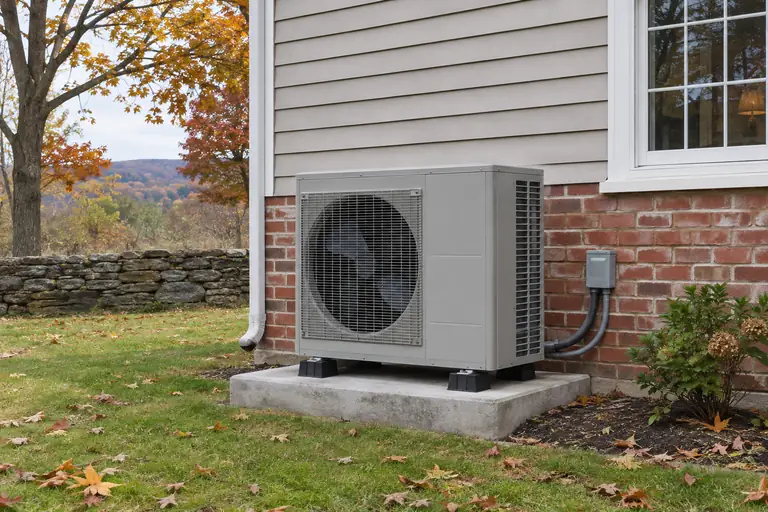
During defrost, the heat pump temporarily redirects heat to clear its outdoor coil, and some systems may deliver cooler indoor air during that period. Frost can form because the coil is colder than the surrounding air. The purpose of defrost is to remove that accumulation and allow normal heating to continue.
An outdoor fan pause, a change in sound or water vapor around the unit can accompany a defrost cycle. Those observations are useful only in context: the system should return to heating and clear the frost. Do not assume that unexplained smoke, a burning smell or persistent failure is normal defrost. Check your model's instructions because timing and backup-heat behavior vary.
Separate the fan setting from auxiliary heat
A thermostat fan setting of On can circulate air even between active heating periods. Read the control instructions and check the normal fan setting before changing anything else. Stay with homeowner settings such as mode, schedule and temperature; installer configuration can affect how the outdoor unit, indoor blower and backup heat work together.
An AUX indication alone does not establish that the heat pump is broken. Backup heat may assist under conditions recognized by the system, including some defrost operation. Report whether AUX appears briefly or much more often than usual, and whether the house is staying warm. Do not suppress the indicator by changing wiring or lockout settings.
Look for accessible airflow restrictions without touching the coil
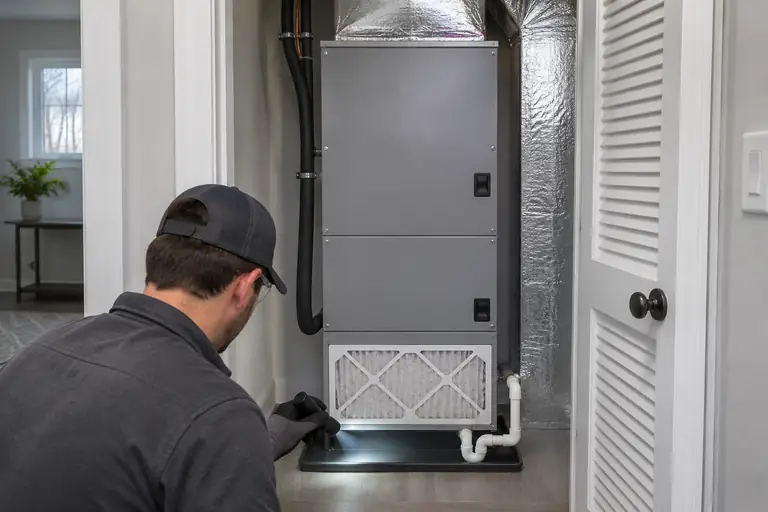
Follow the owner's instructions for inspecting an accessible indoor filter, and keep supply registers and return grilles clear. A blocked air path can affect comfort and equipment operation. If replacing a filter requires unfamiliar panel removal or reaching near electrical parts, stop and ask for the appropriate service.
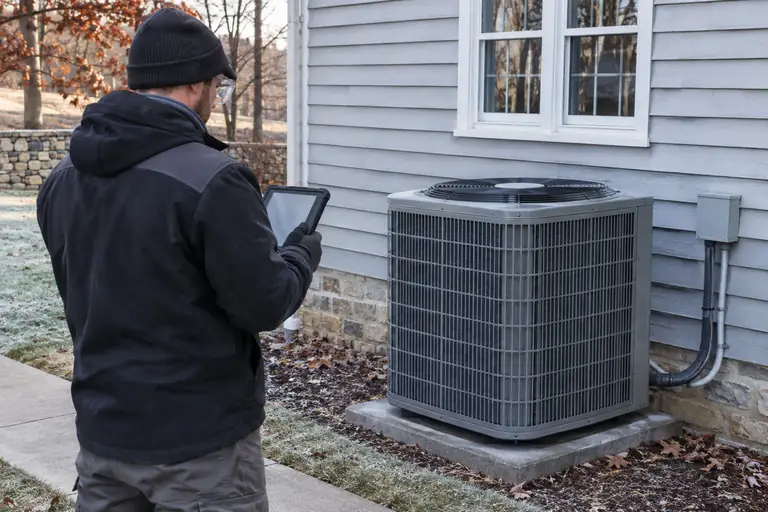
From a safe distance outside, note whether snow, debris or ice is restricting the unit. Minor frost that clears differs from a coil encased in ice. Take a photograph if it helps describe the condition. Do not chip ice, reach through a guard or pour hot water into the equipment. Persistent buildup or repeated unsuccessful defrost needs assessment rather than a forceful cleanup.
Describe the system combination and the pattern of failure
A ducted heat pump may work with an electric air handler or a fuel-burning furnace. Tell the provider which indoor equipment is installed, if known, because the backup heat and controls need different checks. Include the outdoor and indoor model numbers, thermostat message and any recent installation or control changes.
Say whether the problem affects heating only, cooling only or both modes. Note whether the indoor fan runs when the outdoor unit appears idle and whether the temperature recovers after a brief interruption. These observations help frame the request; they are not instructions to cycle equipment repeatedly or test live electrical and refrigerant components.
Use a repair range as a planning reference
Carrier publishes a general U.S. range from $250 to $900 for common heat-pump repairs, not a local average or this business's prices. A control problem, an airflow issue and refrigerant-circuit work have different scopes. Major components and related corrections can exceed that reference, so the actual findings matter more than the symptom label.
Ask what distinguishes expected defrost or backup heat from the confirmed fault and which operating checks will follow the repair. If the system includes fuel-burning equipment and a CO alarm sounds, leave the building and call 911 from outside. For a non-emergency service discussion and a free quote, call Harrisburg Heating and Cooling at (717) 294-0338.
Questions about this topic
Should heat-pump air feel as hot as furnace air?
It may feel cooler while the system still heats the rooms. Check the indoor temperature trend and whether the system reaches the requested setting. A falling room temperature or a sustained change from normal behavior is more informative than one hand-temperature impression.
Is vapor rising from the outdoor heat pump always a problem?
Water vapor can accompany defrost as accumulated frost melts. Consider the whole sequence and whether heating resumes. Do not label a burning smell, smoke or an unexplained persistent condition as harmless vapor; treat signs of fire or another emergency accordingly.
How long should a defrost cycle last?
The duration depends on the equipment and operating conditions. Use the model instructions rather than a universal time limit. If defrost seems constant, takes progressively longer or leaves accumulating ice, arrange a professional assessment of the operating pattern.
Does AUX mean I should select Emergency Heat?
No. An AUX message alone is not a reason to change the system's operating strategy. Follow the instructions for the exact thermostat and heat-pump combination, and ask for help if the system is not keeping the home warm or backup heat behavior has changed.
Can I solve the problem by removing ice myself?
Do not chip the coil, reach into the unit or pour hot water through it. Describe heavy or persistent ice and provide a safe photograph. Addressing the cause may require airflow, sensor, control, refrigerant or other professional checks rather than removing visible ice alone.
Why is my heat pump blowing cold air after a power outage?
Read the displayed mode, fan and schedule settings after power returns, then follow the restart instructions for your model. Do not repeatedly cycle the power or reset a tripping breaker. If ordinary operation does not return, describe the outage and the current symptoms when requesting service.