Furnace Blowing Cold Air in Harrisburg, PA: What to Check
When air moves through the vents but your Harrisburg home stays cold, the first useful question is what the furnace is doing before that cool air arrives. A fan setting, a brief startup period and a heating fault can feel similar at a register. This guide helps you separate simple observations from work that belongs with a heating professional. It does not ask you to open a burner compartment, change wiring or force the furnace to run.
The short answer
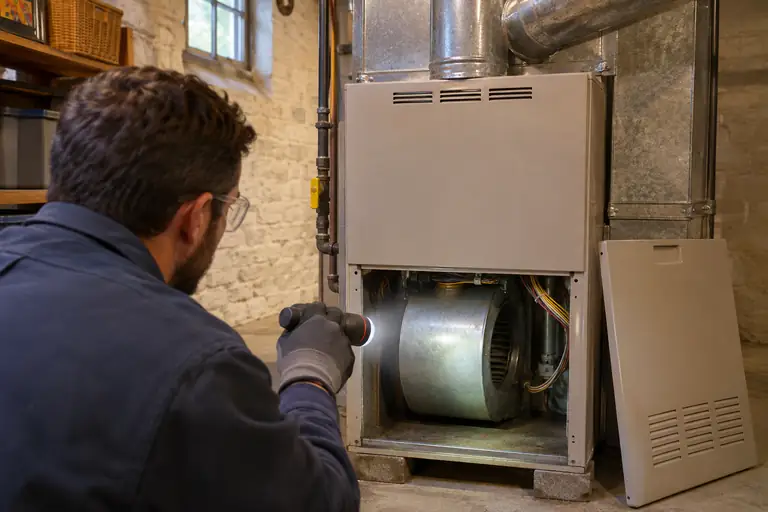
A furnace can circulate cool air between heating cycles when the thermostat fan is set to On. Brief cool airflow at startup can also occur. Persistent cool air, repeated shutdowns or falling room temperature require a furnace-specific assessment after safe thermostat and accessible-filter checks.
Cost reference
This reference is not a price for every cold-air complaint or Harrisburg Heating and Cooling's rate card. A diagnosis establishes which work applies.
| Scope | Published planning range |
|---|---|
| Common furnace repairs | From $200 to $800Carrier's general U.S. guidance; major component or related-system work may cost more. |
Act on an alarm or gas smell before checking settings
If a carbon monoxide alarm sounds, leave the building immediately, call 911 from outside and do not re-enter until responders allow it. Carbon monoxide has no smell. A quiet alarm does not make a suspected gas leak safe, and a service inquiry is not a substitute for emergency assistance.
If you smell gas or suspect a leak, leave the area without operating light switches, equipment or a phone nearby. Contact the gas utility or emergency services from a safe location. Do not try to find or repair the leak. Keep these situations separate from an otherwise ordinary complaint about cool vent air.
Read Heat, Fan and the room temperature together
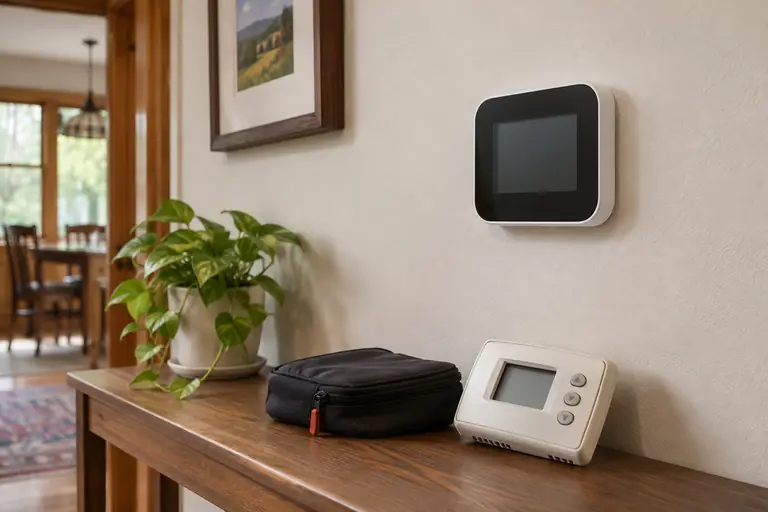
Look at the thermostat without removing its cover. Confirm that the selected mode is Heat, the requested temperature is above the displayed room temperature and the schedule has not changed the setting. A schedule, hold or power interruption can explain an unexpected request without proving that the furnace has failed.
Check whether the fan is set to On or Auto. On can keep the blower circulating air when the furnace is not producing heat. Follow your control's instructions for normal fan operation. If correct settings still leave the house cooling, record that result rather than repeatedly raising the setpoint or changing installer options.
Distinguish a brief transition from repeated loss of heat
Observe the system from outside its closed cabinet during an ordinary heating request. Does air begin cool and then become warm? Does heat start briefly and stop while the blower continues? Does the system remain silent? Write down the sequence in plain language instead of selecting a suspected replacement part.
Some furnaces delay or sequence blower operation as the system warms up. The timing depends on the equipment. Check the owner's manual rather than applying a universal number of seconds. A system that repeatedly loses heat before reaching the requested temperature needs attention even if it works briefly after a reset.
Check only the filter and air paths you can safely access
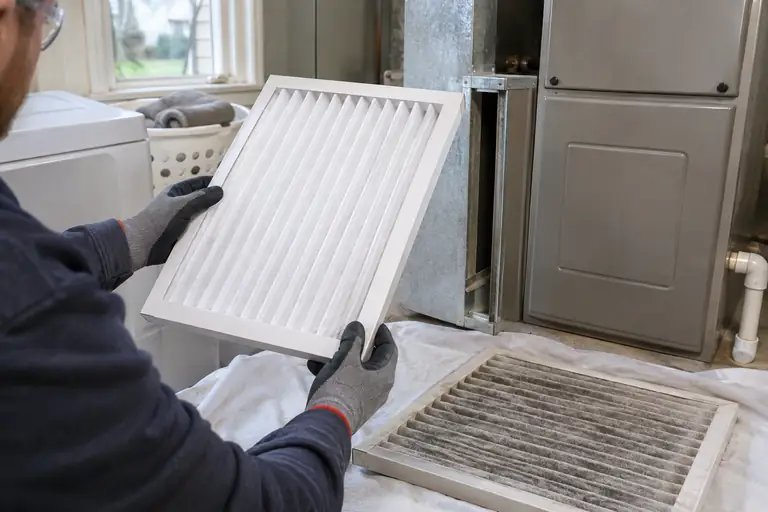
Restricted airflow can lead a furnace safety limit to stop heating while the blower keeps moving air. A dirty filter is one possible restriction; covered return grilles, closed supply registers and equipment problems can also affect circulation. The same symptom can therefore require different work in two homes.
Inspect a filter only where the owner instructions identify a safe, accessible filter location. Follow the shutdown and replacement instructions, use the correct size and airflow direction, and stop if the task requires unfamiliar panel removal or reaching near electrical parts. Keep accessible grilles unobstructed. Do not run the equipment without its required filter or defeat a safety switch.
Explain what remains wrong after those simple checks
If the setting and accessible airflow checks do not resolve persistent cool air, arrange a furnace repair assessment. Ignition, fuel delivery, blower operation, controls and other conditions may need testing. A fault code is useful information, but a code alone does not establish the cause or authorize bypassing a protective control.
Mention whether every room loses heat together or one room remains cold while others warm normally. The second pattern can justify a distribution and airflow discussion alongside the furnace request. Provide the furnace fuel and model, the thermostat message and any recent control, filter or building changes. Leave repeated resets, pilot work and live electrical testing to the appropriate professional.
Budget for the diagnosed problem, rather than the symptom
Carrier publishes a general U.S. range from $200 to $800 for common furnace repairs, not a Harrisburg-specific quote. Major work can exceed that reference. The actual proposal depends on the failed component, furnace design, available parts and any related conditions that must be corrected.
Ask which finding supports the proposed repair and how operation will be checked afterward. Keep the assessment scope and approved repair clear in the written proposal. To discuss your equipment and request a free quote, call Harrisburg Heating and Cooling at (717) 294-0338.
Questions about this topic
Why does my furnace keep running and blowing cold air?
The fan may be operating between heating cycles, during a transition or after heating stops. A protective control or heating fault can produce a similar observation. Check the fan setting and record the sequence; do not infer the cause from airflow alone.
What should I do if my furnace is only blowing cold air?
Check for a warning sign first. Otherwise, read the thermostat's Heat and fan settings, inspect only a safely accessible filter and note the sequence. Persistent cold air and falling room temperature need assessment. An alarm or suspected gas leak requires emergency action before these checks.
Can replacing a dirty filter solve the problem?
It may help if a filter restriction is the cause and the filter can be replaced according to the equipment instructions. It will not correct every ignition, control or fuel issue. A recurring shutdown still needs professional investigation after the accessible filter is addressed.
Should I keep resetting a furnace that starts and stops?
Avoid repeated resets when the fault returns. They do not explain the cause and can remove useful diagnostic information. Follow the instructions for the exact equipment and describe the repeated pattern when requesting service. Never bypass a switch to maintain operation.
Does cold air mean I need a new furnace?
No. A cold-air symptom alone does not establish that replacement is necessary. Obtain findings that explain the actual problem and proposed repair. Compare replacement when the confirmed defect, repair history and overall system condition make that comparison useful.
Why is my furnace running but not getting warm?
Air movement shows that the blower is operating; it does not prove that the furnace is producing heat. Note whether heating begins and then stops, or never appears to start. Thermostat, airflow, ignition and other conditions need to be distinguished through the observed sequence and appropriate testing.