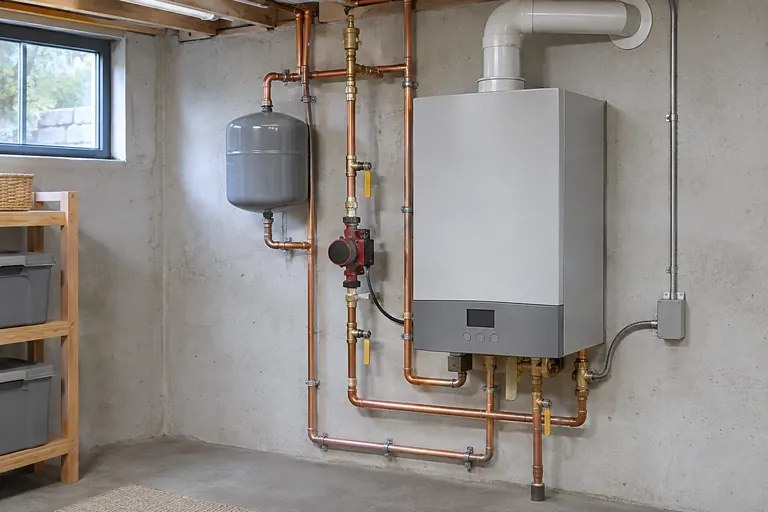
Boiler installation should account for the heat the home needs and the radiators, baseboard, piping and controls that deliver it. A replacement proposal for a Harrisburg home needs more than a new boiler model. Contact Harrisburg Heating and Cooling with the existing fuel and system details, and confirm service eligibility before planning work. Steam, oil-fired and other specialized configurations require an explicit coverage check.
Ask for the actual defect, repair availability and condition of connected equipment before comparing replacement. The cost of a boiler alone does not describe the finished project. A useful alternative includes the piping, controls and supporting work needed to make it operate.
The system has recurring leaks or faults
Bring the repair history and identify what has been replaced. Repeated trouble at one unresolved point differs from normal wear across separate components. A replacement discussion should explain which problems belong to the boiler and which may remain in the distribution system.
Building improvements have changed heat demand
New insulation, windows or an addition can affect the heating requirement. Share those changes early. A replacement chosen solely from the old nameplate may not reflect the present house, and changing boiler size does not automatically balance existing rooms.
A new design affects venting or hot water
Some boiler replacements change the exhaust arrangement, drainage or domestic hot-water connection. Discuss those dependencies before equipment is ordered. Ask what happens to any existing indirect tank, tankless coil or separate water heater, rather than assuming it remains unchanged.
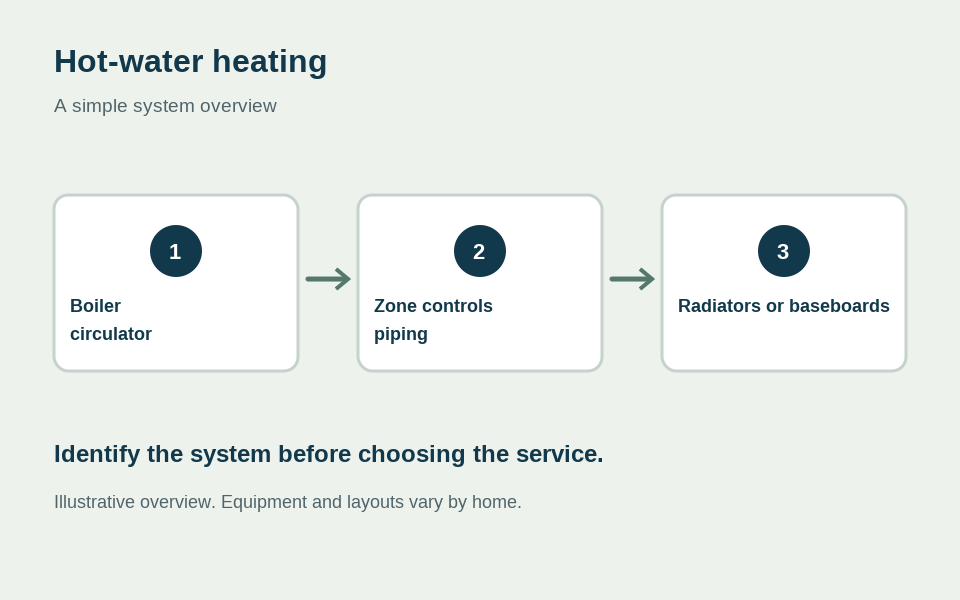
The system behind the symptom
See how the parts connect.
A comfort problem can involve more than the component you first notice. Identifying the equipment and describing what happens helps focus the service conversation.
Use the model label and owner manual for your actual system. Layouts, controls and service requirements vary.
Understand the work
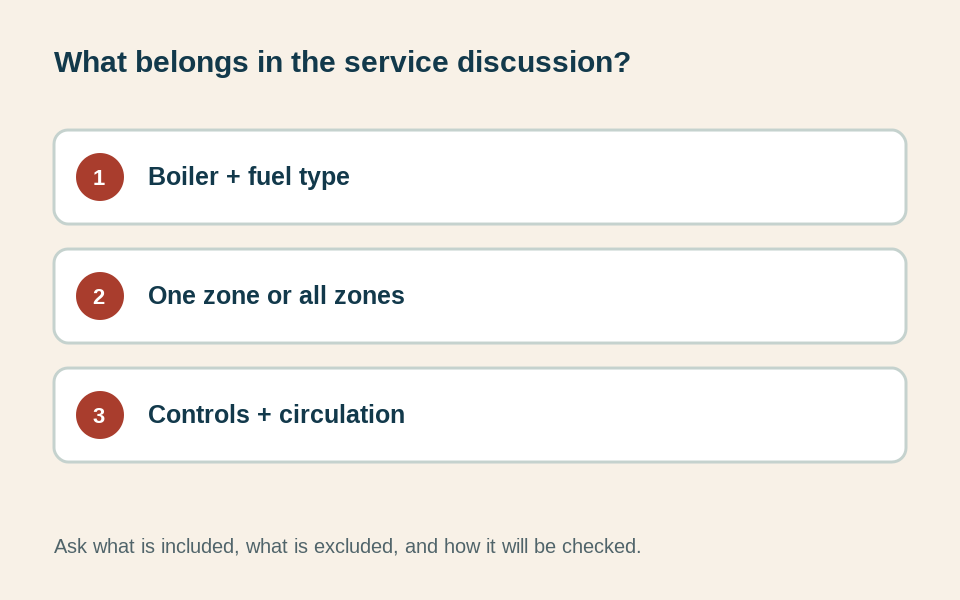
What should the service cover?
These are useful points to discuss. The right scope follows the actual equipment, condition and findings at your home.
01
Confirm system and fuel
Identify hot-water or steam distribution, the existing fuel and any proposed conversion. Confirm that the installation service covers the configuration. A conversion can involve more than the boiler, so supporting fuel or electrical work needs a responsible party and a defined scope.
02
Review load and heat emitters
Ask how the heating requirement and connected distribution were considered. Radiator or baseboard condition, zones and control strategy can influence the design. Explain rooms that heat slowly, overheat or stay cold so those problems are evaluated separately from the appliance decision.
03
Define piping, venting and access work
The written proposal should explain connections, relevant pumps or valves, controls, exhaust and any condensate needs. Ask which existing components remain. Equipment removal, required local permits and access for future service should be addressed before the installation date.
04
Commissioning and handover
Ask what startup observations and zone checks will be recorded and how the controls will be explained. Keep the equipment details and written warranty documents. Confirm owner-care instructions and who handles any applicable registration, rather than assuming all paperwork is automatic.
Before approving work
What affects the quote?
Replacement configuration
A similar hot-water replacement differs from a fuel conversion or specialized steam installation. Confirm eligibility and compare the full equipment arrangement. The new boiler, controls and connected system need to be evaluated together, not priced as unrelated boxes.
Connected piping and controls
Existing isolation valves, circulation components, expansion provisions and wiring may need attention. Ask which items are being reused and why. Distinguishing necessary connections from optional upgrades makes different quotes easier to assess and reduces ambiguous change-order assumptions.
Venting, drainage and project completion
A changed exhaust route, condensate handling, difficult removal or finish work can affect labor. Confirm permits, disposal, startup documentation and warranty terms. Any incentive or financing claim needs current confirmation and should remain separate from the underlying installation price.
Make the call useful
What to have ready.
Gather accessible information. Leave panels, wiring, fuel controls and refrigerant components to a qualified professional.
Collect the boiler model and fuel information, plus details of any connected domestic hot-water tank.
List heating zones, thermostats and rooms with existing temperature or noise problems.
Share repair records, renovation plans and known piping, venting or access constraints.
Identify practical limits for equipment removal and ask which related trades or permissions may be needed.
Helpful answers
Boiler installation questions
Practical guidance for Harrisburg homeowners considering this service.
Can the existing radiators or baseboard remain?+
They may be reusable, but their condition and suitability need review alongside the proposed boiler. Existing room problems can involve emitters, piping or controls. Ask what will stay, what will be tested and which comfort concerns require separate work beyond replacing the heat source.
Is a condensing boiler suitable for every house?+
Suitability depends on the heating system, operating needs, venting, drainage and design. Request a system-specific comparison rather than choosing from efficiency labels alone. Ask how the proposed equipment will work with existing emitters and what modifications are included in the quote.
Will boiler replacement also replace my hot-water system?+
Only if the agreed scope says so. A boiler may serve an indirect tank or a domestic-water coil, while other homes use a separate water heater. Identify the arrangement before comparing proposals and ask how hot-water production, controls and any existing tank are handled.
What belongs in a written boiler installation proposal?+
Look for the boiler model, sizing basis, confirmed fuel and system type, piping and control work, venting, drainage, removal, permits and startup checks. Ask about exclusions and warranty terms. A proposal should make it possible to understand what will be operational when the work is complete.
Describe no heat, a cold zone, unusual pressure behavior or a visible leak. Confirm the boiler fuel and whether the system uses hot water or steam so the service request fits the equipment.
Prepare for seasonal boiler service with the model, fuel, zone information and previous records. Ask which equipment-specific checks are included and keep existing repair concerns clearly identified.
Check smart-thermostat compatibility, power requirements and heating or cooling stages before replacement. Proper controls depend on your equipment and wiring, not simply the number of wires at the wall.
References explain general equipment principles; they do not establish the condition of your system.
Harrisburg Heating and Cooling
Talk through the next step.
Tell us what your system is doing, which rooms are affected, and where you’re located. We’ll discuss the appropriate next step and current availability.